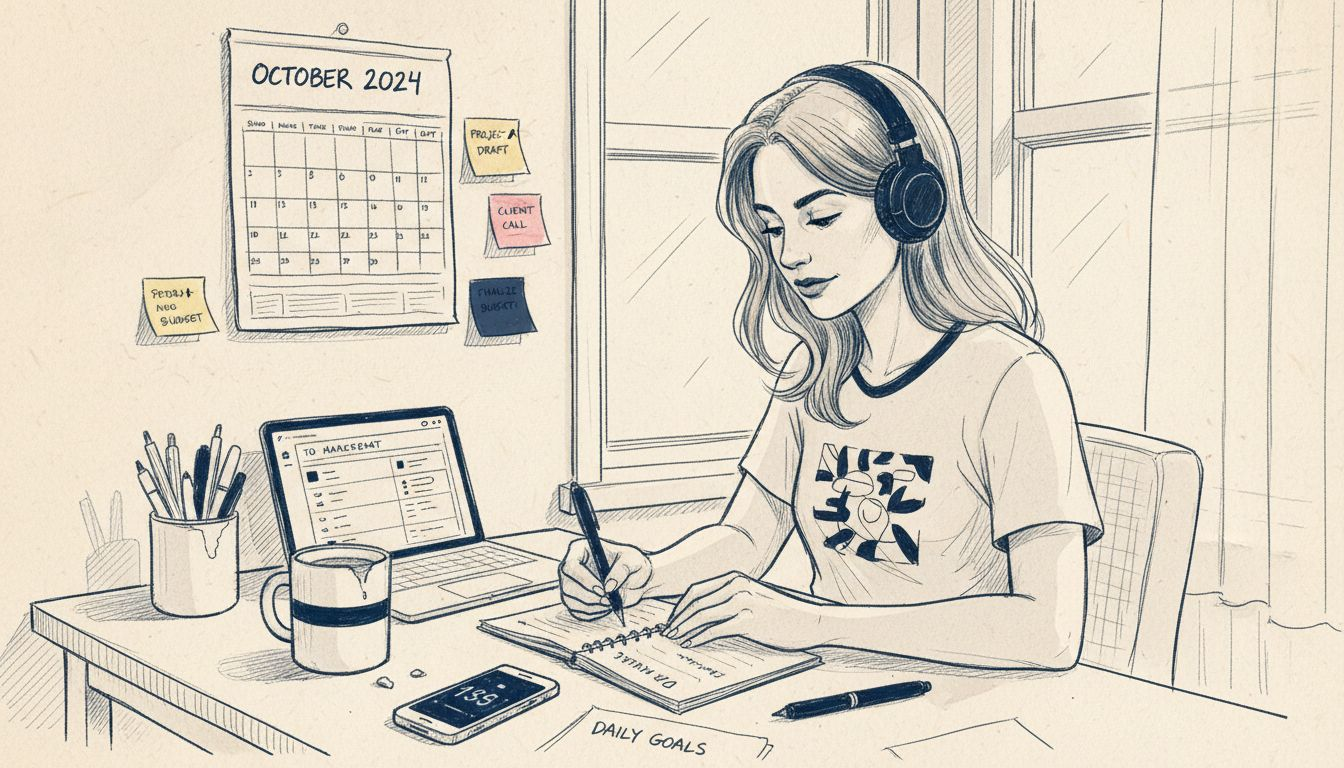
7 ADHD Productivity Hacks for Freelance Success
7 ADHD Productivity Hacks for Freelance Success
Staying productive as a freelancer with ADHD can feel impossible when your mind keeps jumping from task to task. You know the struggle of battling distractions and feeling overwhelmed by unfinished projects. The good news is there are proven techniques that make it easier to focus and get real work done without burning out. These actionable strategies are grounded in research and specifically address the unique needs of ADHD professionals. Get ready to discover practical solutions that help you organize your day, maintain motivation, and unlock a working style that fits your brain. Each insight in this list is designed to help you build confidence and achieve results you can see.
Table of Contents
- 1. Set Clear, Achievable Daily Goals
- 2. Use the Pomodoro Technique for Focus
- 3. Leverage Visual Task Management Tools
- 4. Build Creative Breaks Into Your Routine
- 5. Outsource or Automate Repetitive Tasks
- 6. Create a Personalized Distraction-Free Space
- 7. Set Boundaries to Prevent Burnout
Quick Summary
| Takeaway | Explanation |
|---|---|
| 1. Set Specific Daily Goals | Break your day into clear, achievable tasks to combat overwhelm and increase efficiency. |
| 2. Implement the Pomodoro Technique | Use timed work intervals followed by short breaks to enhance focus and prevent burnout. |
| 3. Use Visual Task Management Tools | Employ visuals to simplify organization and reduce cognitive load, making tasks feel manageable. |
| 4. Schedule Creative Breaks | Engage in dynamic activities during breaks to refresh your mind and maintain productivity. |
| 5. Establish Boundaries to Avoid Burnout | Clearly define work hours and expectations to protect your energy and sustain productivity. |
1. Set Clear, Achievable Daily Goals
Navigating productivity with ADHD can feel like steering a ship through a foggy night. But breaking down your day into crystal-clear and realistic goals transforms chaos into a structured journey.
When you have ADHD, your brain craves specificity and immediate understanding. Vague objectives like “work on project” create mental friction and overwhelm. Instead, craft goals that are:
- Specific: Replace “work on project” with “Write two paragraphs of client report”
- Measurable: Define exact outcomes you want to achieve
- Time-bound: Allocate precise time blocks for each task
- Realistic: Consider your energy levels and potential distractions
Your daily goals should be challenging enough to engage you but not so complex that they trigger executive dysfunction paralysis.
The key is understanding your unique ADHD brain. Neurological research shows that breaking tasks into smaller chunks dramatically increases follow-through and reduces mental resistance.
Start by creating a morning planning ritual. Spend 10 minutes each morning mapping out 3-5 specific, achievable tasks. Use a digital or physical planner with clear checkboxes to visually track your progress.
Pro tip: Use the “Swiss cheese” method by breaking large tasks into tiny, non-intimidating actions that feel almost too easy to avoid.
2. Use the Pomodoro Technique for Focus
Imaging transforming your scattered attention into a laser-focused productivity powerhouse. The Pomodoro Technique is your secret weapon for conquering the chaos of ADHD work patterns.
Academic research on time management techniques reveals that structured work intervals can dramatically improve concentration for individuals with ADHD. The method is beautifully simple yet incredibly powerful.
Here’s how the Pomodoro Technique works:
- Choose a single task to focus on
- Set a timer for 25 minutes of uninterrupted work
- Work intensely until the timer rings
- Take a 5-minute break
- Repeat the cycle four times
- After four cycles take a longer 15-30 minute break
Breaking work into predictable chunks helps your ADHD brain manage time and reduce overwhelm.
The technique offers multiple benefits for neurodivergent professionals:
- Reduces decision fatigue by creating clear work boundaries
- Prevents hyperfocus burnout through mandatory breaks
- Makes large projects feel less intimidating
- Provides frequent dopamine rewards through completion cycles
Practical Implementation: Use digital apps or a simple kitchen timer to track your Pomodoros. Some freelancers find color-coding their work intervals helps maintain motivation.
Research indicates that while the technique might cause slight fatigue, it does not significantly reduce overall productivity for individuals with attention challenges.
Pro tip: Customize your Pomodoro intervals. If 25 minutes feels too long start with 15-minute work blocks and gradually increase duration as your focus muscles strengthen.
3. Leverage Visual Task Management Tools
Imagine transforming your scattered thoughts into a crystal-clear roadmap of productivity. Visual task management tools are like GPS systems for your neurodivergent brain.
Research on assistive technologies confirms that visual interfaces can dramatically reduce cognitive load for individuals with ADHD by providing adaptive organization strategies.
Why visual tools work so effectively for ADHD brains:
- Immediate visual comprehension: Reduces mental processing time
- Breaks down complex projects into digestible chunks
- Provides instant dopamine hits through visual progress tracking
- Supports executive function challenges
- Creates external memory support system
Visual task management transforms overwhelming complexity into navigable, colorful landscapes of achievable actions.
Key features to look for in visual task management tools:
- Color-coded project categories
- Drag-and-drop interface
- Kanban board or swimlane views
- Progress percentage tracking
- Customizable reminder systems
These tools work by externalizating your mental organization. Instead of holding everything in your overwhelmed brain you create a visual representation that feels manageable and engaging.
Pro tip: Choose a task management tool with high customization options and vibrant visual interfaces to keep your ADHD brain consistently stimulated and motivated.
4. Build Creative Breaks Into Your Routine
Breaks aren’t just pauses in your workday they’re rocket fuel for your neurodivergent brain. Your ADHD mind craves dynamic intervals that refresh and recharge your cognitive engines.
Research on active breaks demonstrates that strategic cognitive engagement during breaks can significantly enhance executive functioning and attention.
Creative breaks are not about scrolling social media or passive rest. They’re intentional reset moments that stimulate your brain through movement and mental novelty:
- Sketch a quick doodle
- Do a 5-minute dance break
- Play a quick puzzle game
- Practice juggling or balance exercises
- Write stream-of-consciousness poetry
Your brain needs stimulation that feels like play not punishment.
Key principles for designing effective creative breaks:
- Choose activities that spark joy
- Limit break duration to 10-15 minutes
- Incorporate physical movement
- Engage different cognitive pathways
- Avoid digital screen time
The goal is neural cross-training. By introducing unexpected cognitive challenges during breaks you’re essentially doing mental interval training that keeps your attention muscles flexible and strong.
Pro tip: Create a “break menu” with 10-15 pre-planned creative activities so you can quickly choose a stimulating reset without decision fatigue.
5. Outsource or Automate Repetitive Tasks
Your ADHD brain is a creativity powerhouse not a data entry machine. Automation is your secret productivity weapon that liberates your cognitive energy for high-impact work.
AI-enabled productivity frameworks demonstrate that intelligent task delegation can significantly reduce executive function strain for neurodivergent professionals.
Types of tasks ripe for automation:
- Email sorting and filtering
- Social media scheduling
- Invoice tracking
- Expense reporting
- Client follow-up reminders
- Data entry and transcription
Automation transforms mundane tasks from energy-draining obstacles into seamless background processes.
Strategic automation approaches for freelancers:
- Map out your repetitive weekly tasks
- Identify automation-friendly activities
- Research AI and digital tools
- Implement one tool at a time
- Continuously refine your systems
AI productivity tools can monitor your work patterns creating adaptive task management systems that understand your unique cognitive rhythm.
The goal isn’t replacing human creativity but creating space for meaningful professional growth. By offloading routine tasks you redirect your incredible neurodivergent brain toward innovation and deep work.
Pro tip: Start small by automating just one repetitive task each month to build confidence and prevent overwhelm.
6. Create a Personalized Distraction-Free Space
Your workspace isn’t just a location it’s your productivity sanctuary. For ADHD freelancers creating a tailored environment isn’t a luxury it’s a strategic necessity.
Research on workspace optimization reveals that personalized sensory management dramatically improves focus and executive function.
Key elements of an ADHD-friendly workspace:
- Minimal visual clutter
- Noise-canceling capabilities
- Ergonomic furniture
- Strategic lighting
- Sensory regulation tools
Your environment should whisper productivity not scream distraction.
Strategic workspace design steps:
- Identify personal sensory triggers
- Remove unnecessary visual stimuli
- Invest in noise-management tools
- Create designated focus zones
- Design flexible workspace configurations
Background sound management can transform your productivity. Some neurodivergent professionals thrive with white noise while others prefer instrumental music or nature sounds.
Consider noise-canceling headphones ambient sound machines and room dividers as concentration-enhancing investments. Your workspace is a personal ecosystem designed to optimize your unique cognitive rhythms.
Pro tip: Conduct a monthly “workspace audit” where you ruthlessly eliminate anything that doesn’t directly support your professional flow and creativity.
7. Set Boundaries to Prevent Burnout
Burnout isn’t a badge of honor it’s a professional health hazard. For freelancers with ADHD managing energy isn’t optional it’s survival.
Research on ADHD burnout reveals chronic stress management is critical for neurodivergent professionals to maintain long-term productivity and well-being.
Key boundary-setting strategies:
- Define clear work hours
- Learn to say no to projects
- Communicate realistic expectations
- Schedule mandatory self-care time
- Create financial buffers
- Prioritize mental health consistently
Boundaries are not walls they are guardrails protecting your most valuable asset: your creative energy.
Boundary implementation steps:
- Audit current work commitments
- Identify energy-draining activities
- Develop script for declining requests
- Create non-negotiable personal time blocks
- Establish communication protocols
Your ADHD brain requires intentional protection. Recognize that setting boundaries isn’t selfish it’s a strategic approach to sustainable professional success.
Understand your unique warning signs of potential burnout. These might include increased anxiety irritability reduced creativity or physical exhaustion.
Pro tip: Develop a personal “burnout dashboard” tracking your energy levels motivation and stress signals to proactively manage your professional well-being.
Below is a comprehensive table summarizing seven key strategies for improving productivity with ADHD for freelancers, detailing their implementations and benefits.
| Strategy | Implementation | Benefits |
|---|---|---|
| Set Clear, Achievable Goals | Break tasks into specific, measurable, realistic, and time-bound objectives. Allocate dedicated planning time to outline goals for the day. | Increases clarity, reduces overwhelm, and improves task follow-through. |
| Use the Pomodoro Technique | Work in focused intervals of 25 minutes followed by a short break. Gradually adjust session duration to match your productivity capacity. | Enhances focus, reduces decision fatigue, and prevents burnout. |
| Employ Visual Task Management | Utilize visual tools like color-coded schedules, drag-and-drop systems, and progress trackers to organize complex projects interactively. | Simplifies task comprehension, improves organization, and boosts productivity by externalizing thoughts. |
| Incorporate Creative Breaks | Include enjoyable activities such as drawing, dancing, or playing puzzles during breaks. Avoid screen time and design breaks to be physically and mentally engaging. | Refreshes cognitive energy, enhances creative thinking, and maintains motivation. |
| Automate Repetitive Tasks | Identify tasks suitable for digital automation, such as email sorting and social media scheduling, and implement relevant tools to manage these tasks seamlessly. | Frees up cognitive resources for more meaningful work and streamlines daily routines. |
| Design a Personal Workspace | Create and maintain a distraction-free, personalized work environment using ergonomic and sensory regulation tools tailored to individual preferences for noise, lighting, and space arrangement. | Promotes consistent focus, reduces sensory overwhelm, and supports long-term productivity. |
| Set Sustainable Boundaries | Define clear work hours, implement self-care routines, and learn to say “no” to commitments that do not align with energy or time capacity. | Protects mental health, prevents burnout, and promotes balance between professional and personal life. |
Unlock Your Productivity Potential with Expert ADHD Coaching
Struggling with setting clear goals or managing distractions as described in the “7 ADHD Productivity Hacks for Freelance Success” article is a common challenge for many adults with ADHD. Key pain points like executive dysfunction paralysis, maintaining focus, and preventing burnout demand personalized strategies tailored to your unique brain wiring. Whether it is mastering the Pomodoro Technique, creating distraction-free spaces, or building sustainable boundaries, understanding how to harness these hacks effectively makes all the difference.

Take control of your professional life today by exploring practical solutions designed by an experienced ADHD coach and author at Estelle Rose. Dive deeper into personalized guidance that transforms overwhelming chaos into daily productivity and creative breakthroughs. Visit Estelle Rose Coaching now to start your journey and see how easy it can be to implement these powerful productivity hacks in your freelance career.
Frequently Asked Questions
How can I set daily goals that work for my ADHD?
To set effective daily goals with ADHD, make sure they are specific, measurable, time-bound, and realistic. For example, instead of saying “work on project,” write “Draft two paragraphs of the client report by 10 AM.” Start each day by listing 3-5 achievable tasks in a planner to enhance focus.
What is the Pomodoro Technique and how can it help me stay focused?
The Pomodoro Technique involves working for 25 minutes followed by a 5-minute break, helping you maintain focus without feeling overwhelmed. Implement this by using a timer to track your work sessions, allowing your ADHD brain to manage time efficiently and reduce burnout.
What are some effective visual task management tools I can use?
Effective visual task management tools help break down projects into manageable parts and provide instant visual feedback. Consider using a Kanban board or a digital app that allows color-coding and progress tracking to keep your tasks organized and engaging.
How often should I take creative breaks to boost my productivity?
Incorporate creative breaks every 25-30 minutes to refresh your mind and maintain productivity. Use this time for activities like doodling or simple exercises, aiming for a 10-15 minute duration to stimulate your brain without allowing distractions to creep in.
What specific tasks can I automate to increase productivity?
You can automate repetitive tasks such as email sorting, social media posting, or invoicing to free up your cognitive energy for more impactful work. Identify these tasks in your workflow, and start by implementing one automation tool each month to see a significant improvement in your productivity.
How can I create a distraction-free workspace for better concentration?
To create a distraction-free workspace, minimize visual clutter and use noise-canceling tools to enhance focus. Regularly assess your workspace to eliminate anything that doesn’t support your professional flow, aiming for a setup that promotes creativity and efficiency.

