
Executive Functioning Strategies for Lasting Productivity
Executive Functioning Strategies for Lasting Productivity
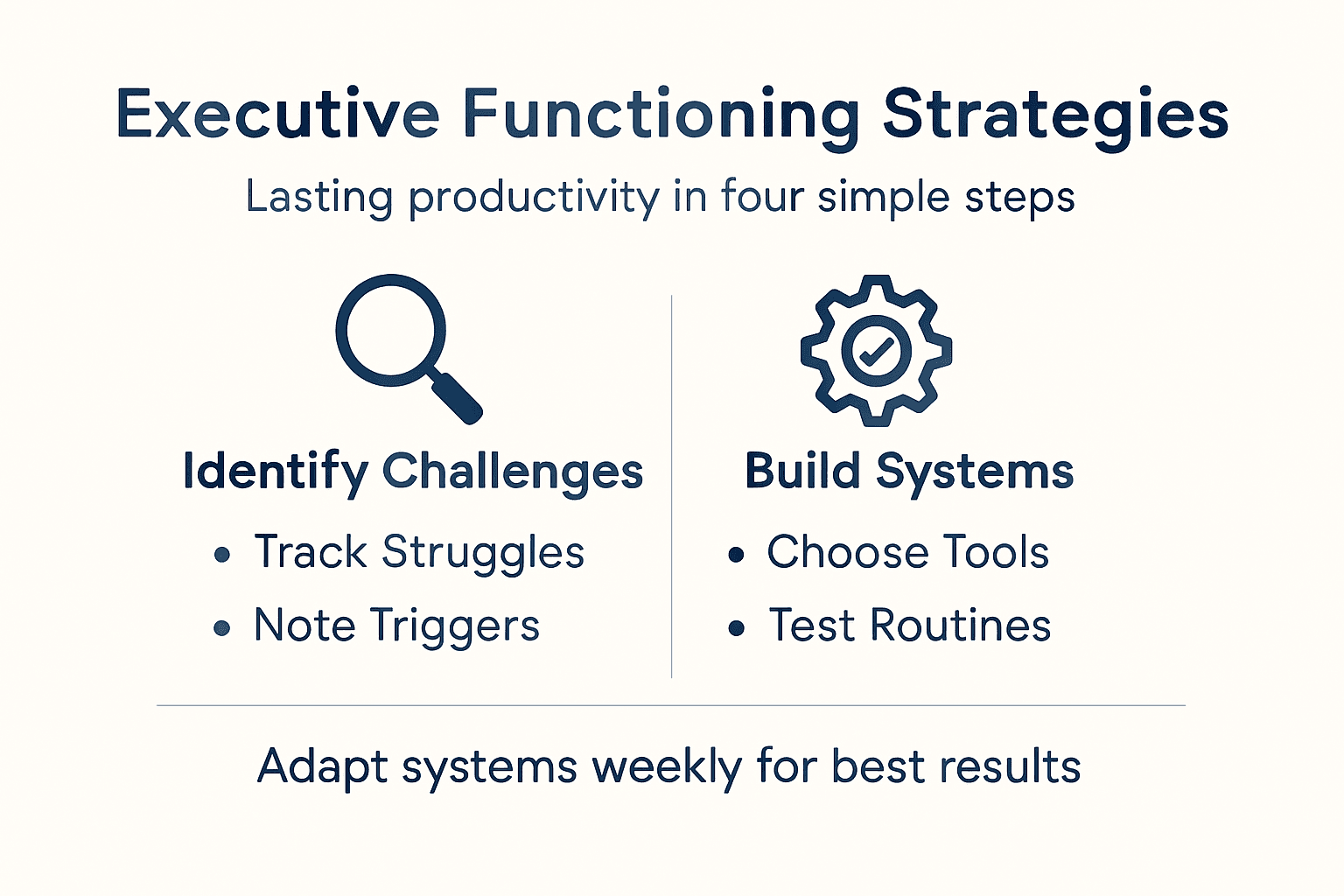
Every creative professional and entrepreneur in the United Kingdom or United States knows the frustration of falling behind for reasons that seem invisible to everyone else. When adult ADHD enters the mix, daily routines and big ideas can quickly unravel. Understanding your unique executive function challenges is the first step toward goal-directed behavior that brings clarity, structure, and much-needed balance to your work and life. This guide breaks down practical steps for recognizing obstacles, building systems that stick, and regaining control.
Table of Contents
- Step 1: Identify Executive Functioning Challenges
- Step 2: Implement Personalized Systems and Tools
- Step 3: Establish Consistent Routines and Cues
- Step 4: Verify Progress and Adjust Strategies
Quick Summary
| Key Insight | Explanation |
|---|---|
| 1. Identify specific executive functioning challenges | Recognize how issues like organization and impulse control derail productivity to target improvement effectively. |
| 2. Implement personalized productivity systems | Select tools and systems that align with your unique work style, focusing on task capture, priority management, and progress tracking. |
| 3. Establish consistent routines and cues | Build automatic habits that simplify decision-making, using anchor points in your daily schedule to reinforce productivity. |
| 4. Verify progress and adjust strategies | Regularly track your effectiveness and be willing to modify your systems based on what is or isn’t working. |
Step 1: Identify Executive Functioning Challenges
Before you can fix anything, you need to know what’s actually broken. Executive functioning challenges aren’t always obvious—they often hide behind excuses you’ve made for yourself for years. This step helps you pinpoint exactly where your productivity is getting derailed.
Start by recognizing what executive functions actually are. These are cognitive processes that enable goal-directed behavior, allowing you to plan, organize, switch between tasks, and manage time. When these systems misfire, everything else falls apart.
Look for patterns in your daily struggles:
- Organization: Do you lose important documents, miss deadlines, or struggle to arrange tasks in a logical order?
- Working memory: Can you hold multiple pieces of information at once, or do you forget what you’re doing mid-sentence?
- Task switching: When you move between projects, can you adapt quickly, or does your brain feel stuck?
- Impulse control: Do you start tasks before thinking them through, or interrupt yourself constantly?
- Emotional regulation: Does frustration derail your entire day, or can you bounce back from setbacks?
For creatives and entrepreneurs especially, pay attention to how your ADHD shows up in your actual work environment. Notice when you procrastinate most, what time of day you feel sharpest, and which tasks consistently trigger avoidance.
Here’s a quick comparison of executive function challenges and their potential impact on creative work:
| Executive Function | Example Challenge | Impact on Creativity |
|---|---|---|
| Organization | Losing track of ideas | Missed deadlines, scattered focus |
| Working Memory | Forgetting task steps | Incomplete projects, interrupted flow |
| Task Switching | Difficulty changing focus | Reduced adaptability, stalled progress |
| Impulse Control | Acting without planning | Unfinished tasks, wasted energy |
| Emotional Regulation | Frustration derails work | Motivation dips, avoidance builds |
The goal isn’t to judge yourself—it’s to gather honest data about how your brain actually operates.
Write down three specific moments this week when your productivity crashed. What were you trying to accomplish? What went wrong? Was it planning, starting, focusing, or finishing? This concrete information is worth more than any generic self-assessment quiz.
Pro tip: Track your executive function struggles for just three days by writing down one time daily when something derailed you—the pattern that emerges will reveal your biggest leverage points for change.
Step 2: Implement Personalized Systems and Tools
Now that you know where your executive functioning breaks down, it’s time to build a system that actually works for your brain. This isn’t about copying someone else’s setup—it’s about creating tools that match how you actually work.
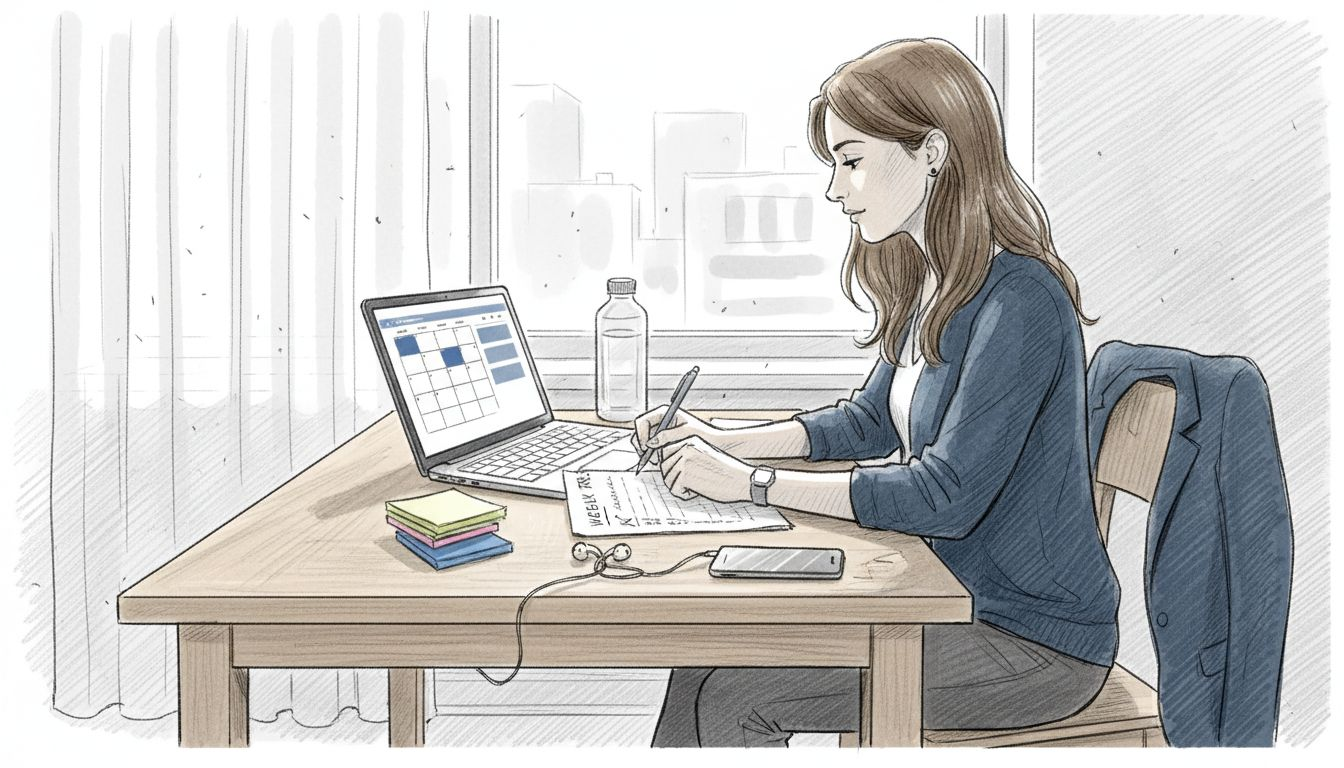
Start by choosing your foundation. You need project management systems, communication platforms, and time management apps that work together, not against each other. Most people fail here because they pick tools based on what looks cool, not what solves their specific problems.
Build your personalized system around three core areas:
- Task capture - Where do ideas and deadlines live? Use one inbox for everything so nothing gets lost in your scattered notes.
- Priority management - How do you decide what matters today? Set up a simple ranking system that doesn’t require constant decision-making.
- Progress tracking - How do you know you’re actually moving forward? Build visibility into your work so you can see momentum.
The trick is intentional tool selection. Don’t grab every app that promises to fix your life. Instead, identify your three biggest pain points from Step 1 and find tools that specifically address those.
For creative work, add features like time blocking for deep focus sessions, automation for repetitive tasks, and collaboration integration if you work with clients or teams. Test each tool for at least two weeks before deciding whether to keep it.
Your system only works if you’ll actually use it—so choose tools that feel natural, not tools that require constant willpower.
Start small with one system rather than five fragmented tools. You can always add complexity later once the foundation is solid and you’ve built the habit.
Pro tip: Set a recurring “system audit” every Sunday evening for 15 minutes to adjust your setup based on what didn’t work that week—this prevents tool overwhelm and keeps your system evolving with your needs.
Step 3: Establish Consistent Routines and Cues
Your brain loves predictability. When you establish consistent routines, you remove the constant decision-making that drains your energy and executive function. This step is about building automatic patterns that support your productivity without requiring willpower every single day.
Routines reduce cognitive load by providing structure that supports planning and self-monitoring. When your brain knows what comes next, it can focus on the actual work instead of figuring out what to do. This is especially powerful for creatives who struggle with decision fatigue.
Start by identifying your anchor points throughout the day. These are non-negotiable times that already exist in your schedule like breakfast, lunch, or the start of your workday. Attach new habits to these existing anchors rather than trying to create routines from scratch.
Build routines around these core times:
- Morning startup - Same time, same sequence: coffee, check calendar, identify your top three tasks
- Focus sessions - Same trigger: “It’s 9 AM, time for deep work” signals your brain to shift into concentration mode
- Transition rituals - Same movement: Stand up, stretch, reset your space before moving to the next task
- End-of-day review - Same moment: Five minutes to capture wins and prep tomorrow’s priorities
The power isn’t in the specific routine—it’s in the consistency. Your brain creates a neural pathway when the same cue happens repeatedly, eventually making the behavior automatic. After three weeks of the same morning routine, you’ll find yourself doing it without thinking.
Cues work better than willpower because they turn decisions into reflexes.
Keep your routines simple and specific. “Get organized” is too vague. “At 8:30 AM, open my project management system and review my three priorities” is actionable.
For reference, here are key routines and cues that help build consistency:
| Routine Type | Example Cue | Benefit |
|---|---|---|
| Morning Startup | Specific time and sequence | Kickstarts focus and planning |
| Focus Session | Scheduled trigger (e.g., 9 AM) | Deep work, minimizes distractions |
| Transition Ritual | Physical action (stretch, reset) | Mental refresh between tasks |
| End-of-Day Review | End-of-work anchor | Insights and tomorrow’s prep |
Pro tip: Design one “failure recovery” routine for when you inevitably skip a day—a simple 10-minute reset that gets you back on track without shame or extended downtime.
Step 4: Verify Progress and Adjust Strategies
Building systems is only half the battle. The real magic happens when you track what’s working and ruthlessly abandon what isn’t. This step ensures your productivity strategies actually stick because you’re measuring and refining them constantly.
Start with honest progress tracking. This means monitoring effectiveness through goal-setting, prioritization, and scheduling tools rather than just hoping things improve. You need concrete data about what you’re actually accomplishing versus what you intended.
Track these three areas weekly:
- Completed tasks - Did you finish what you said you would? Count actual completions, not attempts.
- Quality of focus - How many deep work sessions did you actually have? Were they uninterrupted?
- Energy levels - When do you feel sharp versus drained? Notice patterns around time of day and task type.
After two weeks of data, identify what’s working. Did morning routines stick? Is your task management system actually reducing anxiety? Are you procrastinating less on specific types of work? Celebrate these wins because your brain needs evidence that effort pays off.
Then look at what’s failing. Maybe you’re using four productivity apps when you only have energy for one. Perhaps your routines are too rigid to survive real life. Be willing to simplify ruthlessly rather than adding more complexity.
Progress doesn’t come from perfect execution—it comes from learning what works for your specific brain and doing more of that.
Adjustment doesn’t mean starting over. It means tweaking one element at a time so you can see what actually created the change. Test one small modification for two weeks before changing anything else.
Pro tip: Keep a simple “what worked” document where you note wins and breakthroughs as they happen—when motivation dips, reviewing this becomes powerful proof that your systems actually function.
Unlock Your Productivity with Tailored ADHD Coaching
Struggling with executive functioning challenges like staying organized, managing impulse control, or establishing routines can feel overwhelming. This article breaks down these common pain points and offers strategies to regain control and boost your lasting productivity. If you find yourself stuck in cycles of procrastination or difficulty switching tasks despite trying different methods, personalized support can make all the difference.
Discover how an ADHD coach and author of self help books for adults with ADHD can help you build systems and routines that work with your brain rather than against it. Visit Estelle Rose today to start transforming your executive functioning struggles into strengths with proven, compassionate guidance designed specifically for adults with ADHD. Take the next step now to experience real change and lasting productivity.
Frequently Asked Questions
What are executive functioning challenges?
Executive functioning challenges refer to difficulties in cognitive processes that enable goal-directed behavior, such as planning, organizing, and managing time. To better understand your own challenges, take time to identify specific areas where productivity is getting derailed and list the related symptoms.
How can I create personalized systems and tools for productivity?
To create personalized systems for productivity, choose tools that address your specific challenges, such as task capture, priority management, and progress tracking. Start small by selecting one or two tools that feel natural to you, and assess their effectiveness after using them for a few weeks.
What routines should I establish to enhance my productivity?
Establish routines that align with your daily schedule, such as a morning startup sequence or specific focus sessions at set times. Attach new habits to existing anchor points, and keep these routines simple to reduce decision fatigue and boost automaticity in your productive behavior.
How do I track my progress and make adjustments to my strategies?
Track your progress by noting completed tasks, quality of focus during work sessions, and your energy levels throughout the week. After gathering data for two weeks, identify both what’s working and what requires adjustment, and make one small change at a time to improve efficiency.
What should I do if my productivity strategies are not working?
If your productivity strategies are not yielding the desired results, evaluate their effectiveness by reviewing your data and experiences. Don’t hesitate to simplify your approach, focus on just one element that needs adjustment, and test it for a couple of weeks to see if it improves your outcomes.

