
How to focus with ADHD: proven 2026 strategies for adults
How to focus with ADHD: proven 2026 strategies for adults
You just received your ADHD diagnosis and suddenly your lifelong struggle with focus makes sense. But now you face a new challenge: sorting through countless conflicting recommendations for treatments and strategies. This guide cuts through the noise to deliver evidence-based approaches that actually work for adults with ADHD, combining medication, therapy, coaching, and practical daily techniques you can start using immediately.
Table of Contents
- Understanding Why Focus Is Challenging With ADHD
- Preparing To Improve Focus: Medication And Therapy Options
- Practical Strategies To Boost Focus Daily With ADHD
- Tracking Progress And Adjusting Focus Strategies
- Discover Personalized ADHD Coaching And Resources
- Frequently Asked Questions About Improving Focus With ADHD
Key takeaways
| Point | Details |
|---|---|
| Medical foundation matters | Medication and cognitive behavioral therapy show the strongest evidence for improving adult ADHD focus. |
| Biology, not willpower | Focus challenges stem from dopamine system dysregulation affecting attention and executive function in the brain. |
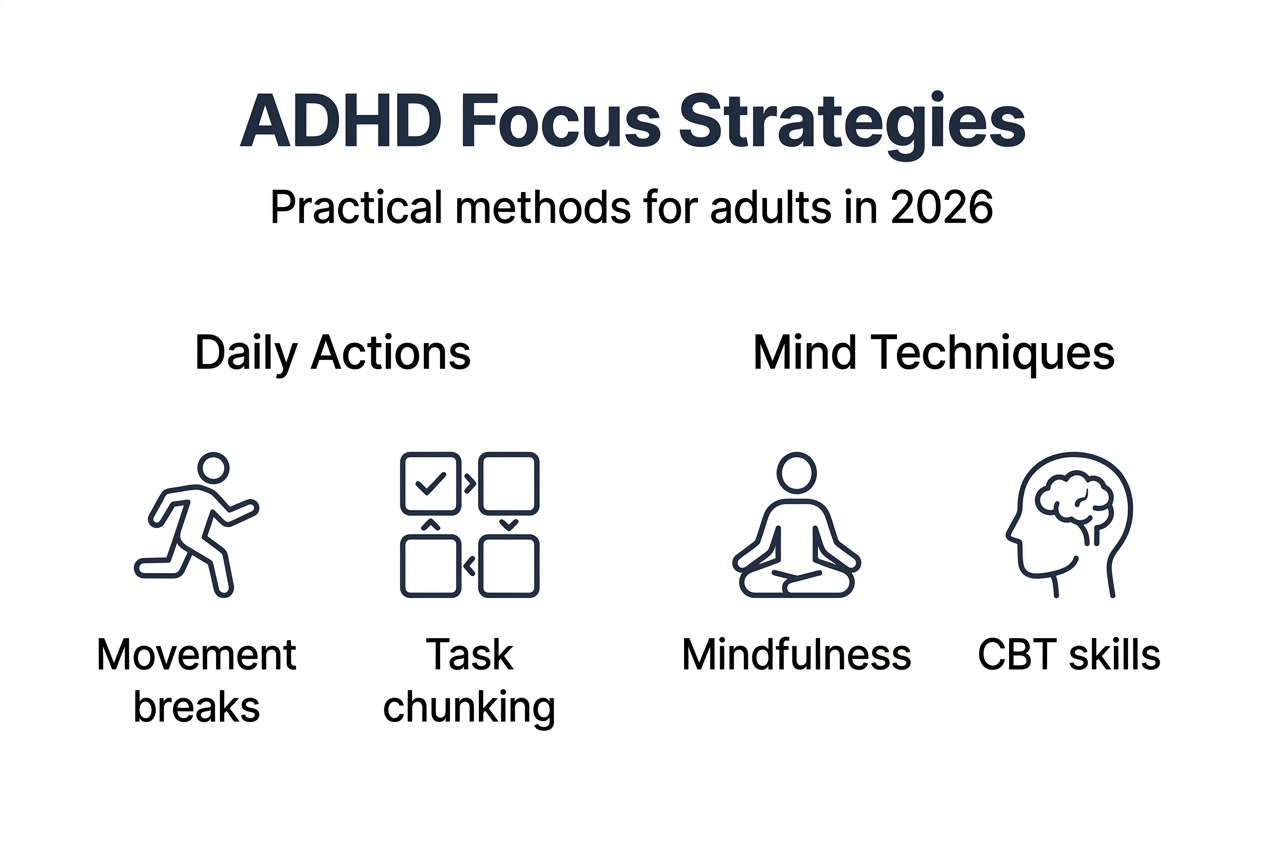
| Daily techniques work | Task chunking, movement breaks, and mindfulness improve attention regulation when practiced consistently. |
| Personalized approach wins | Combining multiple strategies tailored to your specific needs and lifestyle yields the best long-term results. |
| Progress requires monitoring | Tracking what works and adjusting your approach based on real outcomes ensures sustainable focus improvement. |
Understanding why focus is challenging with ADHD
Your difficulty focusing isn’t a character flaw or lack of discipline. ADHD involves dysregulation in dopamine and norepinephrine affecting the prefrontal cortex’s role in attention and planning. This brain region controls executive functions like organizing tasks, filtering distractions, and managing impulses.
The dopamine signaling differences in ADHD brains create inconsistent engagement with repetitive or non-stimulating tasks. You might hyper-focus for hours on something exciting but struggle to start a boring email. This isn’t laziness but your brain seeking adequate stimulation to maintain attention.
These biological facts help explain common ADHD experiences:
- Starting multiple tasks but finishing few because novelty wears off
- Forgetting important details despite trying hard to remember
- Losing track of time when engaged versus feeling every minute drag during dull tasks
- Feeling restless and needing movement to think clearly
Understanding adult ADHD executive function challenges reduces self-blame. Your focus difficulties reflect brain wiring differences requiring specific strategies, not moral failings requiring more willpower.
“ADHD is not about knowing what to do, but about doing what you know.” This captures how execution challenges, not knowledge gaps, create focus barriers.
Recognizing these neurobiological realities prepares you to adopt strategies that work with your brain instead of fighting against it.
Preparing to improve focus: medication and therapy options
Before diving into behavioral strategies, consider establishing a medical and therapeutic foundation. ADHD medications and cognitive behavioral therapy show the strongest evidence for improving focus in adults. These treatments address the biological and psychological dimensions of attention regulation.
Medication options like stimulants or non-stimulants help balance neurotransmitter levels. Many adults report medications reduce mental fog, decrease impulsivity, and make sustaining attention feel less exhausting. Response varies individually, so working closely with a psychiatrist to find the right medication and dosage is essential.
Cognitive behavioral therapy transforms negative thinking to improve focus and self-esteem. CBT teaches practical skills for managing time, breaking down tasks, and challenging thoughts like “I’ll never finish this.” These tools directly support better adult ADHD executive function in daily life.

Emotional therapy benefits many adults with ADHD who experience co-occurring anxiety, depression, or emotional dysregulation. Addressing these issues improves overall well-being and creates mental space for better focus. Emotional ups and downs often interfere with attention, making therapeutic support valuable.
Combining medication with therapy sessions improves consistency and reduces the overwhelm that fragments attention. Neither approach alone works perfectly for everyone, but together they create synergy.
Key preparation steps:
- Schedule an evaluation with a psychiatrist experienced in adult ADHD
- Ask about both medication options and therapy referrals
- Be honest about your specific focus challenges and daily struggles
- Give treatments adequate time to show effects before making changes
Pro Tip: Keep a simple log of your focus levels and side effects when starting medication. This data helps your doctor adjust treatment and shows you patterns you might otherwise miss.
Practical strategies to boost focus daily with ADHD
With medical support in place, layer in behavioral strategies that work with your ADHD brain. Focus can be trained using strategies like movement, structure, and consistency which help brain self-regulation.
Task chunking delivers quick wins. Breaking work into small parts aligns with ADHD brains needing frequent feedback and short-term gratification. Instead of “write report,” try “draft introduction for 15 minutes.” Set a timer, work until it rings, then take a 5-minute break. This rhythm prevents burnout and maintains engagement.
External structure compensates for internal organization challenges. Use these tools:
- Digital or paper planners to capture tasks immediately before forgetting
- Phone alarms for appointments and medication reminders
- Visual timers showing time remaining to improve time perception
- Sticky notes in high-traffic areas for important reminders
Movement resets attention. When focus fades, take a brief walk, do jumping jacks, or stretch. Physical activity increases blood flow and dopamine, helping you return to tasks refreshed. Some people focus better while fidgeting or using a standing desk.
Mindfulness meditation enhances attention control. Even 5 to 10 minutes daily of focused breathing reduces mind-wandering over time. Apps like Headspace or Calm offer ADHD-specific guided sessions. Don’t expect perfection; noticing when your mind wanders and gently redirecting it is the practice.
Nutrition supports brain function. Check out brain boosting food for ADHD to learn which foods may enhance cognition. Protein-rich breakfasts, omega-3 fatty acids, and staying hydrated make a measurable difference for many people.
Environment modifications reduce overwhelm. Create a dedicated workspace with:
- Minimal visual clutter to reduce distractions
- Noise-canceling headphones or white noise
- Your most important task visible and ready to start
- Phone in another room or in do-not-disturb mode
For organizing physical spaces, explore ADHD organization and cleaning tips that respect how your brain naturally works.
Prioritize ruthlessly. Use this simple framework:
| Priority Level | Criteria | Action |
|---|---|---|
| Urgent & Important | Deadline today, major consequences | Do first |
| Important, Not Urgent | Supports goals, no immediate deadline | Schedule specific time |
| Urgent, Not Important | Others’ priorities, interruptions | Delegate or minimize |
| Neither | Distractions, busywork | Eliminate |
Pro Tip: Avoid creating long to-do lists that overwhelm you. Identify your top 3 priorities each day and focus only on those. Everything else is bonus.
Traditional productivity advice often backfires for ADHD brains. Rigid schedules create pressure that triggers avoidance. Instead, build flexibility into your system. If you planned to work on Task A but feel drawn to Task B, sometimes following that energy leads to better outcomes than forcing yourself.
Tracking progress and adjusting focus strategies
Implementing strategies is just the beginning. Monitoring what actually improves your focus and what doesn’t ensures you invest energy in effective approaches.
Keep a simple focus journal noting:
- Which strategies you tried each day
- Your subjective focus rating (1 to 10 scale)
- Time of day when focus felt strongest or weakest
- External factors like sleep quality, stress level, or meal timing
After two weeks, patterns emerge showing your personal focus formula. You might discover you focus best in morning hours, or that skipping breakfast tanks your attention, or that medication works better paired with a morning walk.
Compare strategies side by side:
| Strategy | Ease of Use | Focus Improvement | Sustainability |
|---|---|---|---|
| Task chunking | High | Moderate to high | High |
| Mindfulness | Moderate | Moderate | Moderate |
| Medication | Low effort | High | High |
| Environmental mods | Moderate | Moderate | High |
| Movement breaks | High | Moderate | High |
This comparison helps you identify which approaches deliver the best return on effort. Focus on the combinations that fit your lifestyle and produce results.
Expect setbacks and inconsistency. Many people receive ADHD treatment long-term, but most evidence is short-term, underscoring need for ongoing assessment. Some days will feel like you’ve mastered focus; others will feel like starting over. This variability is normal with ADHD.
Realizing ADHD is a neurodevelopmental condition helps reframe setbacks as part of management, not personal failure. When you struggle, ask: “What does my brain need right now?” rather than “Why can’t I just focus?”
Consult professionals for reassessment if:
- Strategies that worked well suddenly stop being effective
- Your focus worsens despite consistent effort
- You feel overwhelmed adjusting your approach alone
- Life changes (new job, relationship, stress) impact your symptoms
Regular check-ins with your therapist, coach, or psychiatrist keep your treatment plan aligned with your current needs. Tracking adult ADHD executive function over time reveals long-term trends that single observations miss.
Celebrate small wins. Finishing one task completely, remembering an appointment without a reminder, or maintaining focus for 20 minutes all represent real progress. These victories build momentum and prove your strategies work.
Discover personalized ADHD coaching and resources
You’ve learned evidence-based strategies for improving focus with ADHD. Taking the next step with professional support can accelerate your progress and provide personalized guidance for your unique challenges.
Professional coaching offers accountability and customized strategies that generic advice can’t match. An experienced ADHD coach helps you identify which focus techniques align with your brain, lifestyle, and goals. They provide structure for tracking progress and adjusting approaches when you feel stuck.
Explore adult ADHD executive function resources designed specifically for newly diagnosed adults navigating focus challenges. These programs integrate the medical, therapeutic, and behavioral strategies discussed in this guide into cohesive action plans.
Whether you’re an entrepreneur managing business demands or someone overwhelmed by daily organization, ADHD coaching adapts to your specific situation. Specialized support for ADHD organization and cleaning addresses the environmental factors that drain your attention.
Coaching complements medication and therapy by translating clinical insights into daily actions. It bridges the gap between knowing what helps and consistently doing it.
Frequently asked questions about improving focus with ADHD
What is the fastest way to improve focus with ADHD?
Combining medication with one or two behavioral strategies like task chunking or environmental modifications typically produces the fastest results. Medication addresses neurochemical imbalances within days to weeks, while simple structure changes show immediate benefits.
Can you improve ADHD focus without medication?
Yes, many adults improve focus using cognitive behavioral therapy, coaching, mindfulness, and lifestyle modifications without medication. However, research shows medication combined with behavioral strategies produces the strongest results for most people. Discuss options with your healthcare provider.
Why do I hyper-focus on some tasks but can’t focus on others?
ADHD brains seek stimulation and novelty. Tasks that provide immediate interest, challenge, or reward trigger dopamine release enabling hyper-focus. Boring or repetitive tasks don’t generate enough dopamine to sustain attention, making them feel impossible despite effort.
How long does it take to see focus improvement with ADHD treatment?
Medication effects often appear within hours to days. Behavioral strategies like task chunking show benefits immediately but require weeks of practice to become habits. Therapy produces gradual improvements over months. Most people notice meaningful changes within 4 to 8 weeks of consistent multimodal treatment.
What should I do when focus strategies stop working?
Reassess your approach with fresh perspective. Consult your doctor about medication adjustments, try different behavioral techniques, or address new stressors impacting attention. ADHD management requires ongoing adjustment as life circumstances and brain chemistry change. Don’t view this as failure but as normal fine-tuning.
Are there specific foods that help ADHD focus?
Protein-rich foods, omega-3 fatty acids from fish, complex carbohydrates, and adequate hydration support brain function. Some people report reduced symptoms with less sugar and processed foods. While nutrition alone doesn’t treat ADHD, it provides foundational support for other strategies to work optimally.

