
Why ADHD Worsens With Your Menstrual Cycle: A 4 Step Plan for Women
Why ADHD Worsens With Your Menstrual Cycle: A 4 Step Plan for Women
Yes, your menstrual cycle really does mess with your ADHD, and no, you’re not imagining it or “just being dramatic.” Many women with ADHD notice a reliable dip in focus, patience, and executive function in the late luteal, premenstrual window, and this pattern often intensifies through perimenopause. The likely driver is falling oestrogen paired with progesterone metabolite shifts that interfere with dopamine and cognition. Below: the evidence, the phase-by-phase map, and what to actually do about it.
TL;DR:
- Women with ADHD experience the most significant symptom worsening during the late luteal and premenstrual phases when hormone levels drop sharply.
- Tracking focus, emotional reactivity, sleep, and medication effectiveness daily for two cycles helps identify personal patterns and optimize management strategies.
- Stimulant efficacy may decrease during low-estrogen phases, and some women benefit from adjusting the timing or dose under medical supervision.
- Perimenopausal women with ADHD often report more severe symptoms and higher rates of menopausal disturbances and PMDD compared to women without ADHD.
- Hormonal contraceptives have mixed effects on symptoms, requiring careful tracking to determine if they stabilize or worsen ADHD experiences.
Table of Contents
- How the menstrual cycle and ADHD are biologically linked
- Mapping your symptoms to your cycle phase
- What the research says about ADHD medication and your cycle
- Practical coping strategies you can start this cycle
- Perimenopause, PMDD, and knowing when to get help
- Estelle’s four-step, cycle-aware coaching plan
- Does birth control change ADHD symptoms too?
- What we still don’t know about hormones and ADHD
- A cycle-aware standard of care shouldn’t be optional
- Get hands-on support for cycle-aware ADHD management
- Sources
How the menstrual cycle and ADHD are biologically linked
Here’s the part nobody explained to you in health class: your ADHD brain runs on dopamine, and your ovaries are quietly turning that dopamine supply up and down all month like a dimmer switch nobody told you about.
Oestrogen supports dopaminergic and cholinergic activity, the systems behind working memory, focus, and impulse control. When oestrogen drops, so does some of that support, and ADHD symptom risk increases at times of rapid decline in estrogen, with effects showing up at two distinct points in the cycle. Progesterone adds a second layer. Its metabolite, allopregnanolone, acts on GABA receptors, the brain’s braking system for mood and inhibition. When that metabolite shifts unpredictably in the luteal phase, the brake pedal gets inconsistent, right when you need it most.
A narrative review of studies from 2000 to 2025 found cognition and ADHD symptoms fluctuate across the cycle, with impairment showing up most clearly during the luteal phase in women already diagnosed with ADHD. That same review noted something worth sitting with: medication effectiveness itself may dip during low-oestrogen phases, not just your ability to cope with symptoms.
A few honest caveats:
- Many of these studies rely on small samples and self-reported symptoms.
- Cycle phase confirmation (hormone testing versus calendar counting) varies by study.
- Researchers themselves flag the evidence as preliminary and sometimes contradictory.
Statistic to remember: women with ADHD show measurably higher perimenopausal symptom burden than women without ADHD, a pattern covered in detail below. The hormone connection isn’t a minor subplot in your ADHD story. It’s a main character.
Mapping your symptoms to your cycle phase
Once you know the pattern, you can stop gaslighting yourself every month. Here’s the general map research points to, phase by phase:
- Follicular phase (post-period, rising oestrogen). Often your sharpest window. Many women report better focus, more patience, and easier task initiation here.
- Ovulation (mid-cycle). Findings are inconsistent, some women feel a small boost, others notice no change at all.
- Mid-luteal phase. Symptoms can start creeping, especially fatigue and mild irritability, though this varies person to person.
- Late luteal, premenstrual phase. This is the trouble zone. A daily-diary study of 125 women found every ADHD symptom cluster, inattention, hyperactivity, impulsivity, plus functional impairment, spiked here, alongside worse sleep and higher perceived stress.
- Menstruation. Variable and individual, some women feel relief once bleeding starts, others stay in the fog a few more days.
Track these four things daily for two full cycles: focus/workflow, emotional reactivity, sleep quality, and how effective your medication feels. Patterns tend to reveal themselves fast, often within one cycle. That data becomes gold in your next appointment.
What the research says about ADHD medication and your cycle
Here’s a sentence you deserve to hear from someone who gets it: if your stimulant felt like it stopped working the week before your period, that might not be your imagination or your dosage being “wrong.” The same narrative review noted stimulant effectiveness and perceived benefit can drop during low-oestrogen phases, and some women informally take extra doses during the luteal phase to compensate.
Do not do that without talking to your prescriber first. Instead, try this approach:
- Keep a simple symptom log tied to your cycle day, not just the date.
- Bring that log to your GP or psychiatrist and ask directly whether dose timing or a temporary adjustment makes sense for you.
- If comorbid PMDD is in the picture, ask whether an SSRI alongside your ADHD treatment is worth discussing.
- Loop in a gynecologist too. Pharmacological management reviews recommend individualized, interdisciplinary care specifically because trial data on dosing across the menstrual cycle and perimenopause remains thin.
Pro Tip: Photograph your medication log and your cycle-tracking app side by side before appointments. Clinicians move faster with visual, dated evidence than with “I think it’s worse sometimes.”
Cardiovascular monitoring matters if you and your prescriber consider dose changes, especially with stimulants. Never self-adjust. Ever.
Practical coping strategies you can start this cycle
You don’t need a perfect system. You need a low-effort one you’ll actually keep using on your worst week, not just your best one.
Tracking, minimally. Log five things daily: symptoms, medication effect (scale of 1 to 5), sleep hours, stress level, and tasks completed. A basic notes app or a paper calendar works fine, don’t let “finding the right app” become its own ADHD rabbit hole.
Sleep and stress, non-negotiable. Sleep quality and perceived stress amplify late-luteal symptom spikes, which means protecting your sleep window during that phase isn’t optional pampering, it’s symptom management. Aim for a consistent bedtime, a real wind-down routine, and short attention-reset breaks during the day rather than pushing through until you crash.
Nutrition and timing. Protein at breakfast steadies blood sugar and, by extension, focus. Watch your caffeine timing if anxiety spikes premenstrually, and drink more water than feels necessary, dehydration mimics brain fog uncomfortably well. Estelle-rose’s guide on brain boosting food for women with ADHD breaks this down further.
Workplace tactics. Front-load your hardest tasks into your predicted high-focus days (usually follicular phase), and protect your late-luteal week for lower-stakes, more forgiving work. If you can, negotiate small temporary flexibility, an extra day on a deadline, permission to work from home during your roughest days. An ADHD accountability partner, a colleague, friend, or coach who checks in with you, can catch you before a bad week becomes a bad month. Timers and visual task lists help too; Estelle-rose’s ADHD organization strategies go deeper on building systems that survive a bad week.
Movement helps more than most people with ADHD expect. Short, varied workout routines built around attention patterns rather than willpower tend to stick better than a rigid gym plan you’ll abandon by week two.
Perimenopause, PMDD, and knowing when to get help
This is the part that made me want to write this whole article: women with ADHD aren’t just dealing with regular perimenopause, they’re often dealing with more of it, earlier. A population-based cohort study found women with ADHD scored significantly higher on standard menopause symptom measures, with a substantially greater proportion reporting severe symptoms compared to women without ADHD. The difference in symptom severity was most pronounced in a mid-to-late 30s age group, when perimenopause is often not yet suspected.
PMDD risk follows a similar pattern. Women with ADHD show provisional PMDD rates as high as 31 to 41%, compared to roughly 10% in the general population.
Watch for these red flags and don’t wait to raise them:
- Sudden cognitive decline that feels different from your usual ADHD fog.
- Severe mood swings concentrated in the week before your period.
- Menstrual irregularity alongside new or worsening ADHD symptoms.
- Functional decline at work or home that’s new, not chronic.
Ask your GP directly for PMDD screening or a referral to a menopause clinic. Midlife cognitive complaints deserve a combined ADHD and menopause assessment, not an assumption that you’re developing adult-onset ADHD out of nowhere.
Estelle’s four-step, cycle-aware coaching plan
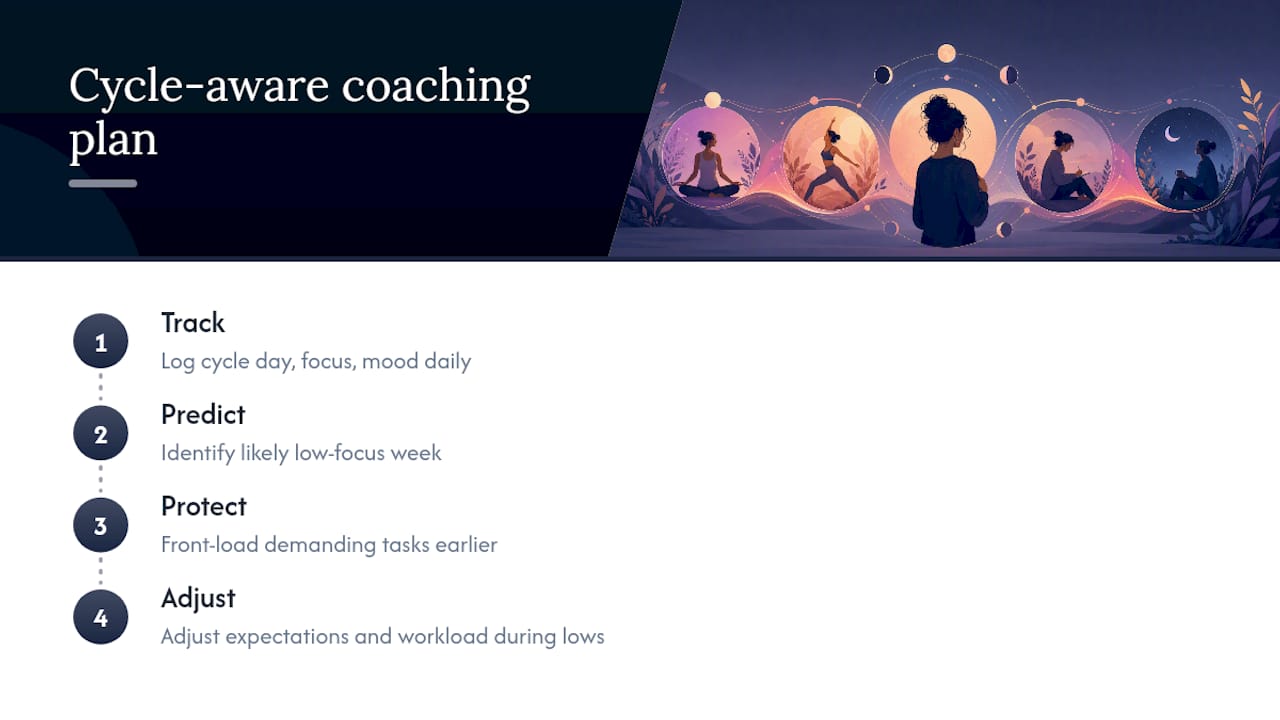
I use a simple framework with clients that doesn’t require a hormone panel or a perfect app: Track, Predict, Protect, Adjust.
Track your cycle day alongside daily focus and mood for one full cycle. Predict your likely low-focus window based on that data (usually the week before your period). Protect that window by front-loading demanding tasks earlier in your cycle. Adjust your expectations and workload for the days you can’t control.
Pair this with ten-minute daily anchors, same time, same simple task, and weekly micro-goals sized to survive a luteal dip rather than assuming your best week every week. Estelle-rose’s Empowering ADHD Workbook for Women walks through this system with worksheets built for exactly this kind of tracking.
Does birth control change ADHD symptoms too?
Hormonal contraceptives complicate this picture in ways that genuinely deserve more research than they’ve gotten. Combined oral contraceptives suppress the natural cyclical rise and fall of oestrogen and progesterone by replacing it with a steadier, synthetic dose. In theory, that steadiness could smooth out the late-luteal crash some women experience. In practice, responses vary enormously and unpredictably from person to person.
Some women with ADHD report that hormonal birth control genuinely stabilizes their mood and focus across the month, flattening the peaks and valleys they used to track like clockwork. Others report the opposite, flatter overall mood, less emotional range, or a return of fog that feels different from their natural cycle pattern. Progestin-only methods (the mini pill, the hormonal IUD, the implant) tend to produce more varied reports still, likely because they don’t suppress ovulation as consistently as combined pills do.
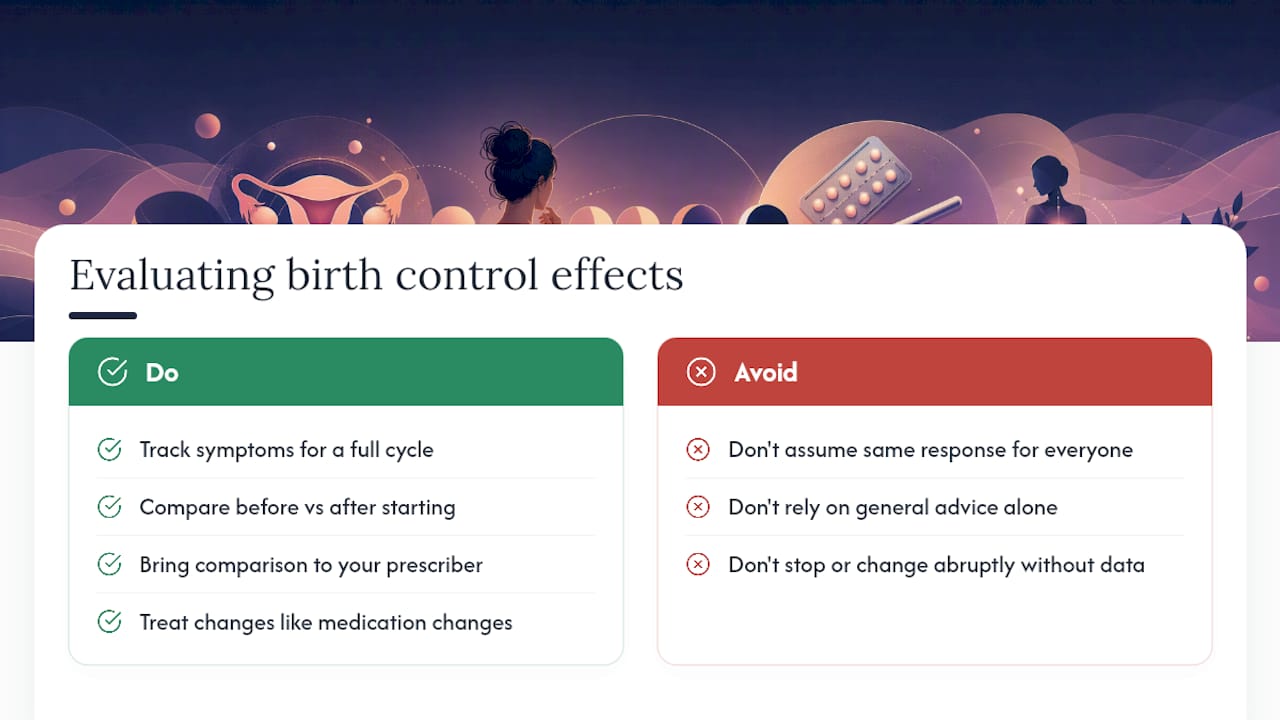
If you’re considering hormonal contraception partly for symptom management, or you’re already on it and unsure whether it’s helping or hurting, treat it the same way you’d treat any medication change: track it. Log your symptoms for a full cycle (or a full pill pack) before you started, and compare against a full cycle after, if you can. Bring that comparison to your prescriber rather than a vague sense that “something feels off.” This is an area where your own data matters more than general advice, because the research consensus simply isn’t strong enough yet to predict how you specifically will respond.
What we still don’t know about hormones and ADHD
The honest answer is: a lot. This field is young, and the gaps are real enough that no one, including researchers publishing in this space, would call the current evidence settled.
Most existing studies rely on small sample sizes and self-reported symptom tracking rather than lab-confirmed hormone levels tied to actual cycle day. That means some findings could reflect recall bias or expectation effects rather than pure biology. Larger studies with hormone-verified cycle phases would tell us far more about how consistent the late-luteal pattern really is across different women, different ADHD presentations, and different medication types.
Treatment research lags even further behind. We have almost no controlled trials testing dose-timing adjustments across the cycle, which is exactly the practical question most women with ADHD actually want answered. Similarly, there’s very little longitudinal data following women with ADHD through the full perimenopause transition to understand whether earlier onset (as the cohort data suggests) is a hormonal, genetic, or diagnostic-bias phenomenon, or some mix of all three.
What would move this field forward fastest: prospective, hormone-confirmed cycle studies; medication trials that specifically test timing adjustments rather than fixed daily doses; and better screening tools that separate ADHD symptoms from PMDD and perimenopausal symptoms when they overlap, which they frequently do. Until that research lands, tracking your own patterns remains the single most reliable tool available.
A cycle-aware standard of care shouldn’t be optional
Here’s my honest take: the fact that so many women spend years thinking they’re failing at ADHD management, when really their hormones are running a monthly obstacle course underneath everything, is not a personal failure. It’s a gap in how ADHD care gets delivered. Your fluctuations are real, they’re documented, and they deserve a place in every treatment conversation, not a footnote after the medication chart.
Clinicians should be asking about menstrual cycles as routinely as they ask about sleep. Employers should be able to offer small, temporary flexibility during a rough week without treating it like a special favor. And you deserve to walk into an appointment with data in hand, not just a feeling that something’s off, and be taken seriously the first time you say it.
— Estelle
Get hands-on support for cycle-aware ADHD management
Estelle-rose is the alternative to generic ADHD advice that ignores your hormones entirely; it pairs ADHD coaching with a life-stage aware lens most standard treatment plans skip. A first coaching session typically starts with symptom mapping tied to your actual cycle data, followed by help liaising with your clinician if needed, and a concrete action plan you leave with, not just insight.

If you’d rather work through this on your own timeline first, The Empowering ADHD Workbook for Women builds cycle-aware planning directly into its worksheets, from tracking templates to workplace scripts. For readers exploring ADHD coaching UK-wide, including support for those using Access to Work coaching funding, or for creatives and entrepreneurs who need an ADHD accountability partner rather than another generic productivity app, book a session on the coaching page and bring whatever cycle data you’ve already got. Even two weeks of notes gives a coach enough to start building your plan around your actual patterns, not a generic one.
This article is general information, not a substitute for advice from a qualified doctor. Consult a qualified healthcare professional about your own circumstances before acting on anything here.

