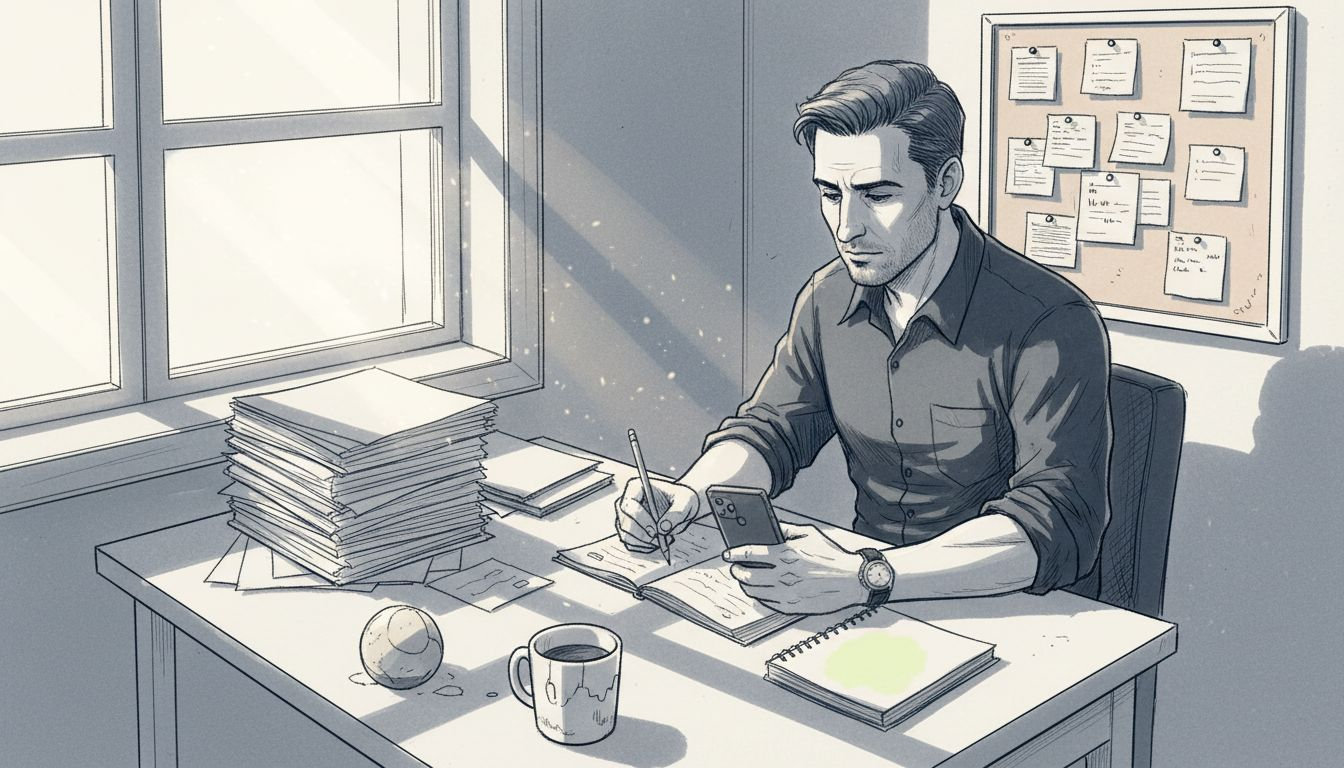
Stress Management for ADHD Adults: Boost Productivity Fast
Stress Management for ADHD Adults: Boost Productivity Fast
Stress at work can feel relentless when you are juggling big ideas and creative projects with an ADHD brain. For many newly diagnosed adults in the United Kingdom and United States, daily challenges like time management issues and lapses in focus create an invisible strain that blocks productivity and sparks frustration. By learning to identify daily stress triggers, you lay the groundwork for routines and workspaces that truly fit your unique strengths and energy needs.
Table of Contents
- Step 1: Assess Daily Stress Triggers In Work And Life
- Step 2: Implement Personalized Stress Reduction Routines
- Step 3: Optimize Your Workspace For Adhd-Friendly Productivity
- Step 4: Monitor Progress And Adjust Techniques
Quick Summary
| Key Message | Explanation |
|---|---|
| 1. Identify Specific Stress Triggers | Recognize moments of heightened stress and write them down to understand patterns and root causes. |
| 2. Create Personalized Routines | Build stress reduction routines tailored to your unique challenges rather than generic advice. |
| 3. Optimize Your Workspace | Design your environment to minimize distractions and enhance focus by creating zones that support productivity. |
| 4. Monitor and Adjust Regularly | Regularly review your stress management techniques to see what works and make necessary adjustments for better results. |
| 5. Use Simple Tracking Tools | Implement easy tracking methods like spreadsheets or apps to monitor your stress and productivity patterns over time for informed decisions. |
Step 1: Assess daily stress triggers in work and life
You’re likely stressed, but do you know why? Identifying your specific stress triggers is the foundation for managing them effectively. This step transforms vague anxiety into concrete patterns you can actually address.
Start by observing your day without judgment. Notice when your stress levels spike, what you’re doing, and who you’re with. Are you overwhelmed during planning meetings? Frustrated when switching between tasks? Anxious about deadlines? Write these moments down.
Research on work performance challenges for adults with ADHD reveals that executive function struggles like time management issues and working memory lapses are major stress sources. You’re not broken; your brain just works differently.
Create a simple stress log for one week. Track these details:
- Time of day the stress occurred
- What you were doing when it happened
- Who was involved (alone, with colleagues, presenting)
- Your physical response (racing heart, tension, fatigue)
- What triggered it (unclear instructions, interruptions, deadlines)
Look for patterns. Does afternoon stress spike after back-to-back meetings? Do mornings feel chaotic because of no structure? Does context-switching drain you more than deep focus work?
Emotional regulation challenges add another layer. If you struggle with frustration or overwhelm, these feelings themselves become triggers. Notice when your emotions intensify—this data matters.
Your stress triggers are clues about how you work best, not personal failures.
Don’t aim for perfection in tracking. A few honest notes are more useful than an abandoned detailed journal.
Here’s a summary showing common stress triggers versus targeted management strategies for ADHD adults:
| Common Stress Trigger | Why It Occurs | Management Strategy |
|---|---|---|
| Overlapping meetings | Time blindness, poor transitions | Schedule meeting breaks, visual timers |
| Chaotic mornings | Lack of structure | Prep routine the night before |
| Demanding deadlines | Working memory lapses, time anxiety | Use to-do apps with reminders |
| Task switching | Executive function strain | Batch similar tasks, set focus blocks |
| Emotional overwhelm | Emotional regulation challenges | Quick mindfulness or breathing break |
Pro tip: Set phone reminders three times daily to pause and rate your stress level (1-10) in a quick note app—this trains your awareness without requiring detailed tracking.
Step 2: Implement personalized stress reduction routines
Now that you know your triggers, it’s time to build routines that actually stick. Generic stress relief advice doesn’t work for ADHD brains—your routines need to match how you actually function.
Personalized routines acknowledge your executive function challenges. You’re not lazy or undisciplined. Your brain needs structure that accommodates time blindness, working memory gaps, and emotional intensity. Research on strategies to make and keep routines confirms that individualized approaches reduce stress and anxiety far more effectively than one-size-fits-all solutions.
Start small and specific. Instead of “exercise daily,” try “walk for 10 minutes right after lunch.” Instead of “meditate,” try “listen to a 5-minute breathing app while coffee brews.” Tiny, attached-to-existing-habits routines survive longer than ambitious ones.
Build your personalized routine around these elements:
- Timing that aligns with your peak focus hours (morning person or night owl?)
- Sensory input you actually enjoy (music, movement, silence, fresh air)
- External triggers that remind you without relying on willpower (phone alarm, visual cue)
- Minimal decision-making (same time, same place, same activity)
- Flexibility for bad days (a shortened version beats abandonment)
Link new routines to existing anchors. If you always make coffee, add your breathing exercise then. If you walk to work, use that time for a quick body scan. This habit stacking approach requires less activation energy.
Track what actually reduces your stress, not what you think should. You might thrive with intense exercise while someone else needs gentle stretching. Pay attention to your data.
The best stress routine is the one you’ll actually do, not the perfect one you’ll abandon.
Start with one single stress reduction routine. Master it for two weeks, then add another.
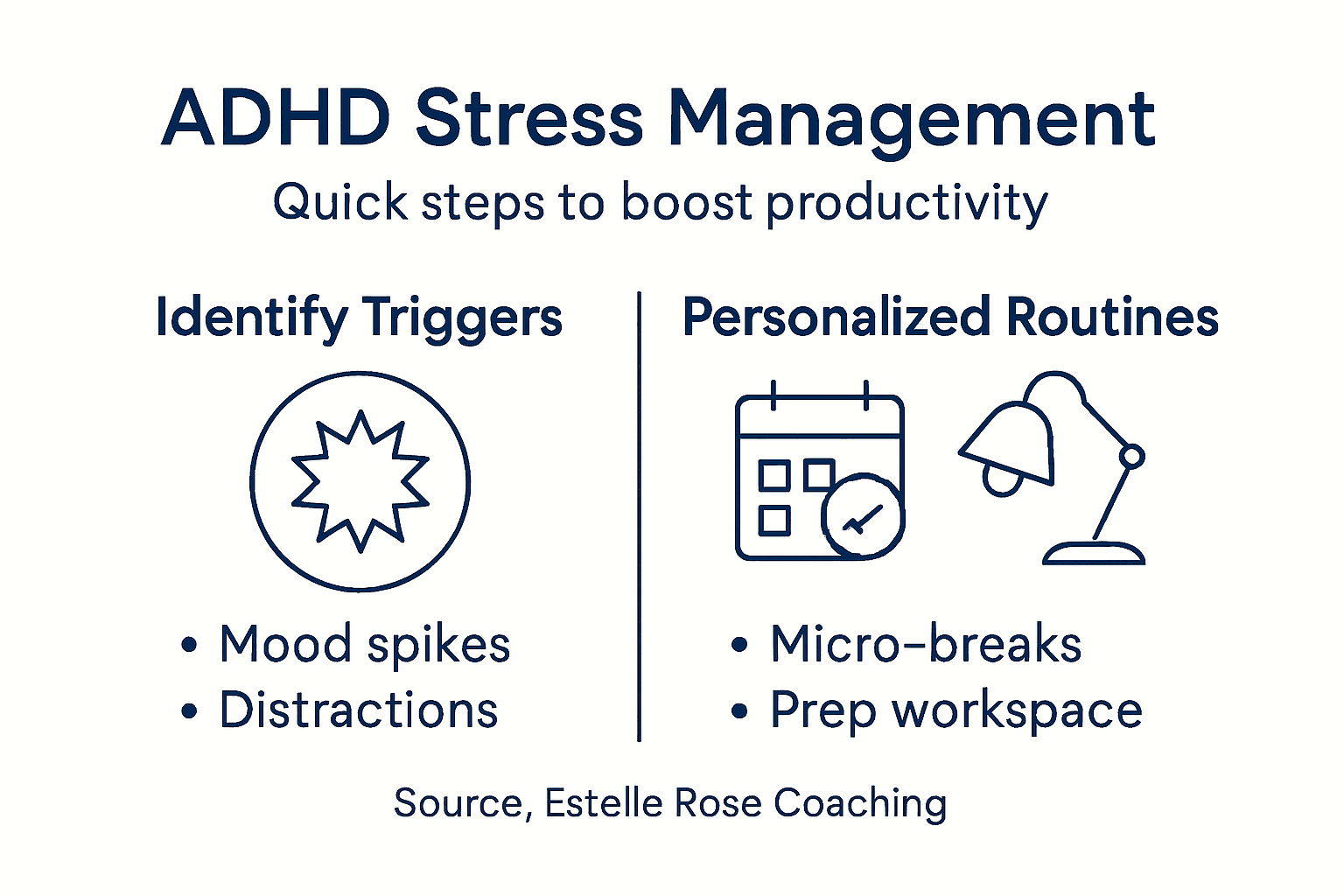
Pro tip: Set up your routine the night before (lay out clothes, prep space, set alarms) so morning friction vanishes and your ADHD brain has fewer decisions to make.
Step 3: Optimize your workspace for ADHD-friendly productivity
Your environment shapes your focus more than willpower ever will. A poorly designed workspace fights against your ADHD brain constantly, draining energy before you even start working.
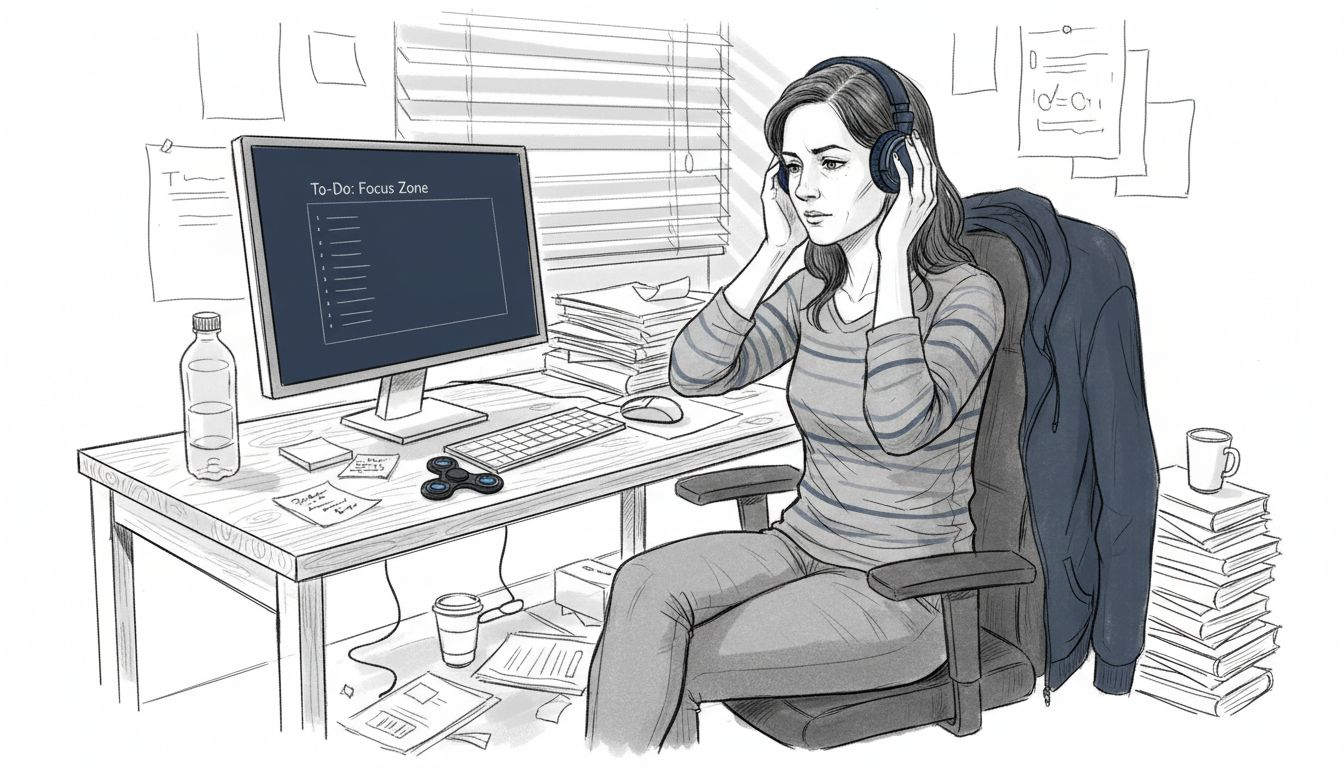
The goal here is simple: create zones and conditions that support concentration instead of sabotaging it. Research on inclusive workplace design for ADHD shows that distinct work zones, sound management, adjustable lighting, and furniture supporting movement all enable sustained focus and energy regulation.
Start by assessing your current setup honestly. Where do you actually focus best? Is it quiet or with background noise? Bright or dimly lit? Sitting still or moving around? Your ideal workspace might look nothing like someone else’s, and that’s completely fine.
Configure your space with these practical elements:
- Dedicated focus zone separate from distractions (if possible, a corner or different room)
- Sound control using noise-canceling headphones, white noise, or earplugs
- Lighting adjustment with desk lamps or dimmer switches to reduce eye strain
- Movement options like a standing desk, fidget tools, or a wobble cushion
- Visual boundaries to minimize clutter and distracting movement in your peripheral vision
Remove or hide common distractions. Your phone should be face-down or in another room during focus blocks. Close unnecessary browser tabs before starting work. Clear your desk of items unrelated to your current task.
Consider your energy regulation needs. Some ADHD brains need to move to think. Others need complete stillness. Build furniture and tools around your rhythm, not against it.
Your workspace reflects your ADHD reality, not a character flaw.
Make one change at a time and test it for three days before adding another. Small, sustainable improvements beat a complete overhaul that exhausts you.
See how various workspace modifications directly support ADHD productivity:
| Workspace Modification | ADHD Challenge Addressed | Productivity Benefit |
|---|---|---|
| Noise-canceling headphones | Sensory distractions | More consistent deep focus |
| Standing desk/fidget tools | Movement needs | Energy regulation, less fatigue |
| Desk lamp/dimmer switch | Lighting/visual overload | Reduced strain, better comfort |
| Visual clutter barriers | Peripheral distractions | Fewer interruptions, clarity |
Pro tip: Create a “launch pad” near your workspace with everything you need for focus (water, headphones, fidget tools, timer) so you don’t need to hunt for items mid-task.
Step 4: Monitor progress and adjust techniques
You’ve set up systems and routines, but static strategies fail. Your stress management approach needs regular check-ins and adjustments based on what’s actually working for you.
Tracking progress isn’t about perfection or guilt. It’s about gathering data to inform smarter decisions. Research emphasizes that monitoring task completion and adjusting strategies allows more precise management of ADHD symptoms and stress, encouraging adaptive coping that evolves with your needs.
Set up a simple weekly review. Pick one day (Sunday evening works for many) to assess the past week without judgment. Did your stress reduction routine help? Which techniques actually stuck? Where did stress spike despite your efforts?
Track these specific markers:
- Stress levels before and after using your techniques (1-10 scale)
- Technique completion (did you actually do the routine?)
- Real productivity gains (tasks finished, not just hours worked)
- Energy patterns (when you felt most focused and drained)
- Trigger frequency (are certain triggers happening less often?)
Notice what’s genuinely reducing stress versus what you think should work. A technique that sounds perfect might feel impossible for your brain. That’s not failure; that’s valuable information.
Don’t wait for perfection to decide if something works. Give each technique two weeks before evaluating. Your ADHD brain needs consistency to show real results.
When something isn’t working, adjust rather than abandon. If 10-minute meditation feels impossible, try 2-minute breathing. If your workspace feels too rigid, add flexibility. Small modifications beat total overhauls.
Progress isn’t linear, and neither should your strategies be.
Personalized ADHD management requires ongoing refinement. What worked last month might need tweaking as your stress patterns shift.
Pro tip: Use a simple spreadsheet or app to log your weekly observations so you spot patterns over time; looking back at four weeks of data reveals trends your memory alone misses.
Take Control of ADHD Stress and Unlock Your True Productivity
Managing stress with ADHD can feel overwhelming when daily triggers, emotional overwhelm, and workspace distractions hold you back. This article sheds light on key challenges like time blindness, emotional regulation difficulties, and executive function struggles that affect your focus and energy. If you find yourself battling chaotic mornings, constant task switching, or relentless deadlines it is time to explore solutions designed to support your unique brain wiring.
Discover practical strategies and personalized coaching tailored for adults with ADHD at Estelle Rose. Benefit from expert guidance in building routines that stick, customizing your workspace for better focus, and tracking progress without guilt. Don’t let stress control your day anymore. Start now to boost your productivity fast by visiting Estelle Rose Coaching and begin transforming your ADHD challenges into strengths today.
Frequently Asked Questions
How can I identify my specific stress triggers related to ADHD?
Start by observing your daily activities for a week, noting moments when stress levels spike. Track the time, what you were doing, who you were with, and your physical responses to help pinpoint your unique stressors.
What are effective ways to implement stress reduction routines for ADHD?
Develop personalized routines that fit your lifestyle, such as exercising for 10 minutes after lunch or practicing a 5-minute breathing exercise while waiting for your coffee. Focus on small, consistent actions that require minimal decision-making to enhance your chances of sticking with them.
How can I optimize my workspace to support productivity if I have ADHD?
Create a designated focus zone in your workspace, free of distractions, and adjust the lighting for comfort. Incorporate movement options like a standing desk to keep energy levels up, and test one adjustment at a time to see what best supports your concentration.
What should I track to monitor my stress management progress?
Evaluate your stress levels, technique completion, and real productivity gains in a simple weekly review. Use a scale of 1-10 to rate your stress and identify patterns to fine-tune your approach.
How quickly can I expect to see results from my stress management techniques?
By monitoring your techniques consistently and adjusting as needed, you can begin to see improvement in your stress levels and productivity within two to four weeks. Make adjustments rather than abandoning any technique that doesn’t work right away to ensure continued progress.
What is the best way to make adjustments to my stress management strategies over time?
Regularly assess the effectiveness of your strategies during your weekly review sessions and be open to change. If a technique isn’t working after two weeks, modify it instead of stopping altogether; for example, shorten a meditation from 10 minutes to 2 minutes until it feels manageable.

