
Men with ADHD: Coach Backed 5 Step Trigger Log to Control Anger
Men with ADHD: Coach Backed 5 Step Trigger Log to Control Anger
ADHD commonly produces emotional dysregulation that often looks like intense anger in men, and it is both explainable and treatable. This isn’t a character flaw or a discipline problem. It’s a wiring issue with a known name and known coping tools, and the strategies section below gives you a place to start today.
TL;DR:
- Managing triggers like criticism, overload, and missed deadlines is essential, as patterns generally reveal themselves before anger fully erupts.
- In-the-moment techniques such as paced breathing and sensory grounding can help slow or interrupt escalating anger episodes.
- Long-term progress relies on tracking patterns, rehearsing responses, and building organizational environments tailored for ADHD brains.
- Untreated anger can lead to relationship strain, career issues, and mental health problems, but early intervention can halt this downward spiral.
- Support from partners and coaching relies on understanding early warning signs, setting boundaries, and focusing on underlying shame and emotional pain.
Table of Contents
- What Is ADHD Rage, and Why Does ADHD Fuel Anger in Men?
- What Triggers ADHD Anger, and What Are the Early Warning Signs?
- How Anger Damages Relationships, Work, and Self-Image
- Practical Tools to Manage ADHD Anger in the Moment and Over Time
- When to Get Professional Help for ADHD Anger
- How Anxiety, Depression, and Substance Use Make ADHD Anger Worse
- Do Men and Women With ADHD Experience Anger Differently?
- What Happens Long-Term When ADHD Anger Goes Unmanaged?
- How Partners and Family Can Support a Man With ADHD-Related Anger
- Why Childhood Coping Skills Shape Adult ADHD Anger
- A Coach’s Take on ADHD Anger in Men
- How Estelle-rose Can Help You Manage ADHD Anger
- Sources
What Is ADHD Rage, and Why Does ADHD Fuel Anger in Men?
ADHD rage isn’t the same as garden variety frustration. It’s a faster, hotter, harder-to-stop version of anger that shows up before you’ve consciously decided to be angry, and it lingers long after the trigger has passed. Clinicians call the broader pattern emotional dysregulation: a mismatch between the size of the feeling and the size of the event that caused it, paired with a slow return to baseline once the wave has crashed.
The mechanics are mostly executive function, not personality. ADHD weakens the brain’s braking system, the part responsible for pausing between “I feel this” and “I do this.” Add affective intensity (feelings that hit harder and faster in ADHD brains) and a sluggish emotional rebound, and you get outbursts that feel involuntary because, neurologically, they mostly are.
Three amplifiers make this worse specifically for men:
- Male socialization that treats anger as an acceptable emotion but treats sadness or fear as weakness, so anger becomes the default exit for anything uncomfortable.
- Rejection-sensitive dysphoria, a hair-trigger reaction to perceived criticism or exclusion that’s common in ADHD and often mistaken for oversensitivity.
- Shame from late diagnosis, which turns “why can’t I control this” into a private verdict on your worth as a man.
Adults with ADHD report high rates of emotional dysregulation tied directly to relationship strain, and a large share of men with ADHD specifically link unmanaged emotional reactivity to problems at home and at work.
What Triggers ADHD Anger, and What Are the Early Warning Signs?
The triggers are rarely random. Rejection, criticism (even gentle, well-meant criticism), sensory overload, missed deadlines, and the general sense of being overwhelmed by too many open tasks are the usual suspects. Recognizing your own pattern is half the battle, because ADHD anger almost always announces itself before it explodes.
Watch for a tightening jaw, a flushed face, a racing internal monologue, or a sudden urge to leave the room. Mentally, you’ll often notice tunnel vision: everything except the trigger disappears. A simple one-to-ten anger scale, where one is calm and ten is “already yelling,” gives you language to catch yourself at a four instead of noticing at a nine.
Pro Tip: Keep a two-week trigger log on your phone. Each time you feel a spike above a five, jot down three things: the time, what happened right before, and your number on the scale. Patterns show up fast, usually within four or five entries.
A basic version of that log looks like this:
- Note the date and time the moment you feel the spike.
- Rate the intensity on your one-to-ten scale.
- Name the trigger in a few words (email, traffic, kid’s meltdown).
- Write one sentence about what you did next.
- Review the log every Sunday for repeat patterns.
How Anger Damages Relationships, Work, and Self-Image
The fallout from unmanaged anger rarely stays contained to the moment it happens. It leaks into every part of a man’s life, often quietly, until the pattern becomes the relationship.
- Partners describe walking on eggshells, which erodes intimacy far faster than the outburst itself.
- Colleagues start routing around you on projects, which stalls careers even when your work is strong.
- Kids learn to read your face before they read the room, which teaches them to manage you instead of trusting you.
Then comes the shame-anger loop: you blow up, you feel disgusted with yourself, that shame lowers your tolerance for the next frustration, and the next outburst comes faster. Left alone, this cycle feeds isolation and depression. If you’ve just had an outburst, the repair matters more than the apology’s timing. Name what happened plainly, own it without over-explaining, and ask what the other person needs from you right now, not just later.
Practical Tools to Manage ADHD Anger in the Moment and Over Time
Managing ADHD anger isn’t about becoming a calmer person overnight. It’s about building a short list of moves you can reach for automatically, because in-the-moment willpower is exactly the resource ADHD anger burns through first.
In the moment, when the spike is happening:
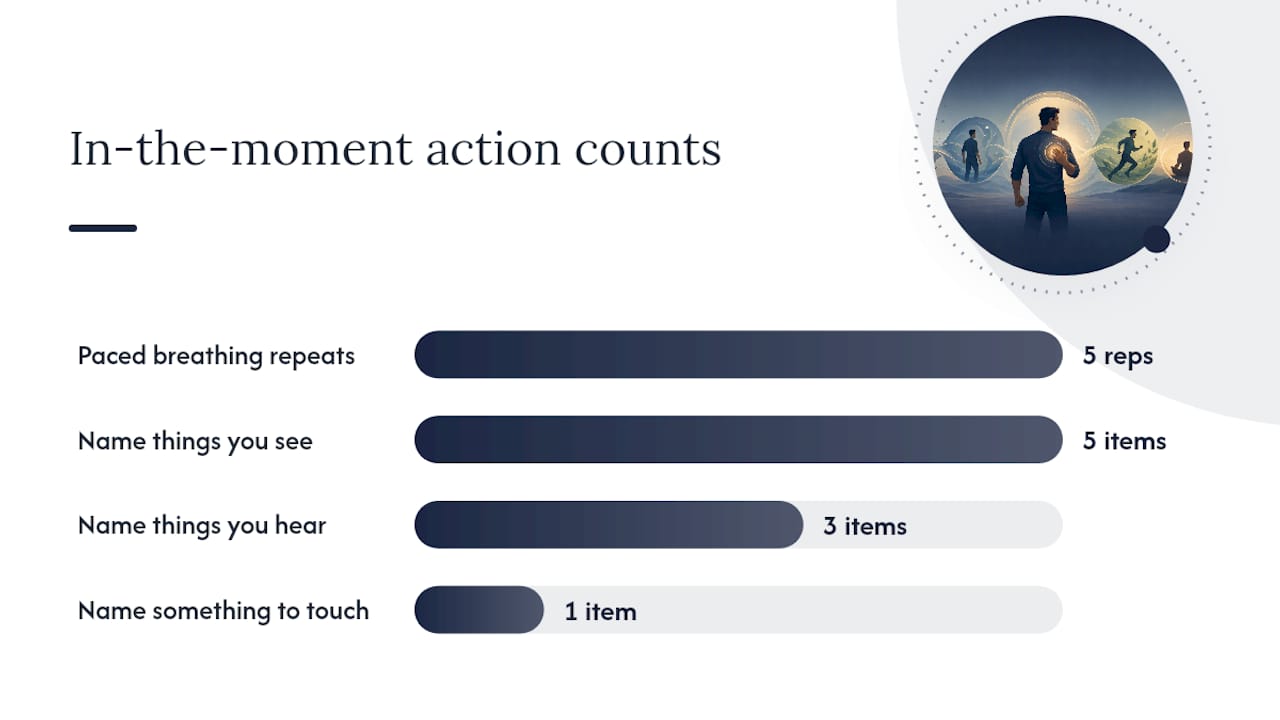
- Paced breathing: four seconds in, six seconds out, repeated five times, to slow the physical alarm.
- Grounding through the senses: name five things you can see, three you can hear, one you can touch.
- A short walk, even to the end of the hallway and back, to interrupt the tunnel vision.
- A sensory shift, like cold water on your wrists or gripping something textured, to jolt your nervous system out of the loop.
At the habit level, built over weeks:
- Keep the trigger log described earlier running for at least a month, not just two weeks, to catch slower patterns like fatigue or hunger.
- Build an anger-scale plan: what you do at a four (step away), what you do at a seven (leave the room entirely).
- Rehearse short scripts for predictable flashpoints, such as “I need five minutes before we talk about this.”
- Adjust your environment where you can. Noise-canceling headphones and a decluttered workspace remove triggers before they start, which pairs well with organization strategies built for ADHD brains.
Therapy skills worth training deliberately include CBT-style cognitive restructuring (catching the “he’s disrespecting me” thought and testing it before reacting), emotion labeling (naming the feeling under the anger, usually hurt or fear), and basic DBT distress tolerance, which is simply riding out an urge without acting on it.
Pro Tip: Write two scripts now, before you need them: one for apologizing (“I raised my voice, that wasn’t fair to you, here’s what I’ll do differently”) and one for setting a boundary (“I can’t have this conversation right now, but I want to finish it tonight”). Having the words ready removes the improvisation that ADHD brains struggle with mid conflict.
When to Get Professional Help for ADHD Anger
Medication helps, but it has a ceiling. Stimulants improve focus and impulse control, yet they’re only partially effective against rage itself, and clinicians sometimes add an SSRI when irritability stays severe after stimulant treatment is optimized. That’s a decision for a prescriber, not a DIY adjustment.
Therapy tends to close the gap medication leaves open. Useful modalities include:
- ADHD-informed CBT, which adapts cognitive techniques to executive-function limits instead of assuming you’ll just remember to use them.
- DBT skills groups, particularly for distress tolerance and emotion regulation modules.
- Anger management programs specifically adapted for ADHD, rather than generic anger courses built for neurotypical brains.
- ADHD coaching, which builds the daily scaffolding therapy alone often doesn’t cover.
Combined pharmacological and psychotherapeutic approaches are frequently recommended together rather than either alone. Get help urgently if anger tips into violence, thoughts of harming yourself or others, or a steady decline in your ability to function at work or home. If you’re in the UK, the NHS neurodiversity pathway is a reasonable starting point, and showing up with a two-week trigger log, three concrete examples, and a clear goal (“I want fewer blowups at home”) makes that first appointment far more productive.
How Anxiety, Depression, and Substance Use Make ADHD Anger Worse
Anger rarely travels alone. Anxiety adds a constant hum of threat-detection that makes ordinary friction feel like an emergency, and depression drains the patience reserves you’d normally use to ride out a bad moment. Both are common alongside ADHD, and both lower your baseline tolerance before a single trigger even happens.
Substance use complicates things further. Alcohol in particular loosens the same inhibitory control that ADHD already weakens, which is a rough combination. A man who’s fine sober might find that two drinks turn a minor disagreement into a shouting match, not because the alcohol created the anger, but because it removed the brakes that were barely holding already.
The practical takeaway is that treating anger in isolation, without asking what else is running underneath it, tends to produce shallow results. A coach or clinician worth working with will ask about sleep, mood, and drinking patterns before jumping straight to anger tactics. If you notice your temper is worse on weeks you’re anxious, low, or drinking more than usual, that’s not a coincidence. It’s a map. Following it usually matters more than any single anger technique, because you’re addressing the fuel supply instead of just the fire.
Do Men and Women With ADHD Experience Anger Differently?
The neurology of emotional dysregulation doesn’t discriminate by gender, but expression and consequences often do. Men with ADHD are more likely to externalize anger outward, through raised voices, slammed doors, or blunt confrontation, largely because that’s the emotional vocabulary boys are handed early. Women with ADHD more frequently internalize the same dysregulation as irritability turned inward, self-criticism, or anxiety that gets mislabeled as “just moody” rather than recognized as ADHD.
That expression gap shapes treatment too. Men are more likely to be coached on de-escalation and impulse-control tactics aimed at the visible outburst. Women are more often guided toward naming and validating the feeling before it curdles into resentment or shuts down entirely. Neither pattern is fixed by biology alone. It’s shaped heavily by what each gender was taught was acceptable to show.
This matters for men specifically because the coping tools built for “calm down” often miss the underlying vulnerability, usually shame, fear of failure, or grief over years lost to undiagnosed ADHD, that the anger is covering. Estelle-rose’s workbook for women with ADHD reflects that internalized pattern directly, which is a useful contrast if you’re trying to understand why your partner’s ADHD looks nothing like yours. Recognizing the difference helps couples stop assuming the other person is “handling it wrong” when they’re simply handling a differently shaped version of the same condition.
What Happens Long-Term When ADHD Anger Goes Unmanaged?
Unmanaged anger doesn’t stay a single-moment problem. Over years, it compounds into chronic stress, and chronic stress has real physical costs: elevated blood pressure, disrupted sleep, and a body that’s rarely out of fight-or-flight long enough to recover properly.
Mentally, the toll is just as steep. Repeated outbursts followed by shame create a grinding cycle that raises the risk of depression and anxiety over time, not just as side effects but as near-inevitable outcomes of years spent apologizing for the same pattern. Relationships that absorb repeated anger tend to thin out, friend by friend, until isolation sets in quietly. Men in that position often don’t notice the shrinking circle until it’s already small.
Careers take a hit too, sometimes in ways that are hard to trace back to anger directly. Passed-over promotions, quiet exclusion from projects, a reputation as “difficult” that never gets explained to your face. None of it shows up on a performance review, but all of it adds up.
The good news is that this trajectory isn’t fixed. The men who interrupt it earliest tend to do one thing in common: they stop treating anger as a mystery and start treating it as a pattern with data. A trigger log, a therapy relationship, or structured coaching can bend that curve at almost any age, and the earlier you start, the less repair work there is to do later.
How Partners and Family Can Support a Man With ADHD-Related Anger
Supporting someone through ADHD anger is a genuinely difficult balance: you want to help without becoming a permanent buffer that lets the pattern continue unaddressed. Start by separating the person from the symptom, out loud if it helps. “I know this isn’t really about the dishes” is a small sentence that carries a lot of relief for someone stuck in shame.
Learning the early warning signs alongside him helps too. If you both know that a tight jaw or a sudden silence means a five on the anger scale, you can name it calmly (“you’re at a five, want a minute?”) instead of escalating by accident. That only works, though, if he’s built the scale himself first. Never manage his anger for him.
Boundaries still matter. Supporting someone doesn’t mean absorbing verbal harm indefinitely. It’s fair, and often necessary, to say “I’ll finish this conversation when things are calm” and mean it. Partners who need their own outlet often find real value in low-key social spaces built around connection rather than crisis. Something as simple as a regular pub night built around men’s mental health can do more for a struggling man’s mood than another well-meaning lecture at home ever will. Encouraging that kind of outside connection, instead of trying to be his only outlet, tends to lighten the load for everyone in the house.
Why Childhood Coping Skills Shape Adult ADHD Anger
Most men with ADHD anger issues weren’t born volatile. They were boys who never got taught the skills that would have made adult regulation easier, often because their ADHD went unrecognized until well into adulthood.
Kids with ADHD typically get disciplined for the outburst itself, sent to their room, told to calm down, without ever being taught what calming down actually requires: naming the feeling, noticing the body’s warning signs, or having a script ready before the moment hits. That gap doesn’t close on its own. It just gets carried into adult bodies with adult stakes, adult relationships, and adult consequences for the same unaddressed pattern.
This is why so many men describe their anger as feeling “childish” even as adults. In a real sense, it is exactly that young, because the skill-building that should have happened at age nine or fourteen simply didn’t. The fix as an adult isn’t fundamentally different from what should have happened decades earlier: naming feelings, tracking triggers, and rehearsing responses. It’s just happening later, with more at stake and, usually, with a lot more shame layered on top that has to be worked through first.
A Coach’s Take on ADHD Anger in Men
Here’s what most articles about ADHD anger get half right and half wrong: they treat the anger as the problem to solve. It’s not. It’s the smoke alarm. The actual fire underneath is usually shame, grief over years lost before diagnosis, or the exhausting effort of masking all day just to seem “normal.” Treat the smoke alarm without touching the fire, and you’ll just get a quieter version of the same blowup.
Three things I’d have you try before you book anything with anyone: track your number on the anger scale for one week, no judgment, just data. Name one thing your anger has been protecting you from feeling instead. And tell one person, out loud, that this is ADHD and not a character defect. That sentence alone starts dismantling the shame backpack faster than most techniques ever will. Coaching works because it pairs that reframe with real accountability, someone checking whether you actually did the thing, not just talked about it.
— Estelle
How Estelle-rose Can Help You Manage ADHD Anger
If you’ve read this far and recognized yourself in the trigger patterns or the shame-anger loop, you don’t need another article. You need someone checking in on whether you actually tried the plan. That’s the gap between reading about anger management and building an accountability partner who catches you before the next blowup, which is exactly what one-to-one ADHD coaching is built for.

Coaching can support self-employed professionals, creatives, and impact-driven founders whose ADHD anger shows up hardest under deadline pressure and client friction. An initial session usually starts by mapping your specific triggers and building the anger-scale plan described earlier, tailored to your actual work and relationships rather than a generic template. If you’re navigating Access to Work funding for coaching support, this is a conversation worth having early, since it can cover sessions focused on executive function and emotional regulation at work. Explore ADHD coaching for entrepreneurs and creatives, browse strategies for improving executive function, or start with the self-help books if you want to work through the groundwork before booking a call.
Sources
For deeper reading beyond this guide, the PMC review on ADHD and emotional dysregulation covers the research behind tailored behavioral interventions. Medical News Today’s overview of ADHD and anger offers a clear clinical summary for newly diagnosed readers. For UK-specific next steps, the NHS neurodiversity pages outline available support pathways, and workplace protections are detailed in the Equality Act 2010 disability definition.
This article is general information, not a substitute for advice from a qualified doctor. Consult a qualified healthcare professional about your own circumstances before acting on anything here.
- ADHD rage and anger issues: emotional dysregulation and treatment considerations (ADDitude)
- PMC article on emotional dysregulation and ADHD (PMC9160326)
- NHS Dorset neurodiversity — ADHD overview

