
Finish ADHD Workbook Exercises in Seven Days, Coach Backed
Finish ADHD Workbook Exercises in Seven Days, Coach Backed
This page hands you a prioritized set of ADHD workbook exercises and printable templates you can start today, no perfect morning routine required. The fastest one to try right now: a 20 to 30 minute focus plan paired with five minutes of movement before you touch your hardest task. Everything below comes from CBT-based worksheet formats, and a coaching lens can help keep these from becoming one more thing you abandon by Thursday.
TL;DR:
- Focusing on a 20 to 30 minute activity before tackling difficult tasks, combined with movement, significantly improves attention and reduces impulsivity.
- Using a small number of tailored worksheets, like goal breakdowns or impulse-control scripts, promotes consistency, especially when paired with accountability support.
- Simple environment tweaks, movement, and low-tech cues enhance worksheet effectiveness and make daily habit formation more sustainable.
- Short daily practices, rather than lengthy sessions, are more effective for building executive function skills and avoiding burnout.
- Worksheets function best when combined with coaching or peer support, particularly for adults dealing with anxiety, low mood, or trauma-related barriers.
Table of Contents
- Top ADHD Workbook Exercises and Printable Worksheets
- How to Use ADHD Workbook Exercises Without Burning Out on Them
- Building an ADHD Coping Toolbox Around Your Worksheets
- Why These Exercises Work: CBT, Executive Function, and Estelle’s Coaching Lens
- Where to Find Printable ADHD Worksheets Worth Using
- Estelle’s Coaching Perspective: One Client, One Week
- Estelle’s Workbook and Coaching: How to Get Guided Support
- Sources
Top ADHD Workbook Exercises and Printable Worksheets
You don’t need twelve worksheets. You need three or four that actually match how your brain gets stuck, used consistently, printed or copied into a notebook you’ll actually open. Here’s the list Estelle hands most new clients, in the order that tends to build momentum instead of guilt.
- SMART goal worksheet. Break one large goal into micro-steps with a visible deadline for each. “Launch my website” becomes “write homepage copy, Tuesday, 25 minutes.” The specificity is the whole trick.
- Brain dump / focus plan. Two columns: everything in your head, then one target you’ll actually work on for the next 20 to 30 minutes. This single worksheet, borrowed from formats like the ADHD Workbook from Choosing Therapy, does more heavy lifting than any app.
- Pomodoro and time-blocking log. A planning box for the session, a log box for what actually happened. The gap between the two is where you learn how your time estimates lie to you.
- Task breakdown, or the “3-card technique.” Write your task on three index cards at three levels of granularity. Start with whichever card feels smallest enough to not trigger avoidance.
- STOP/REST impulse-control worksheet. A four-step script (Stop, Take a breath, Observe, Proceed) for the moment before you send the reactive email or buy the thing you don’t need.
- Emotion regulation log and mood check-in. A short daily entry tracking trigger, feeling, and response, drawn from the same executive-function framework used in the BetweenSessions workbook.
- Daily routine and habit tracker. Anchor tiny habits to things you already do, brush teeth, then take meds, rather than to willpower alone.
- Procrastination activation ritual. A start script (“open the laptop, open the document, write one sentence”) paired with a small, immediate reward.
- Burnout checklist. A short early-warning list, irritability, missed meals, dread on Sunday nights, plus three rapid recovery actions.
- Pre-task movement prompt. Five to ten minutes of movement before demanding cognitive work. This isn’t optional fluff; it’s mechanism, which the next section unpacks.
- Kids’ social skills worksheets. Short role-play scripts (“what do I say when I interrupt by accident?”) paired with a simple reward chart.
- Tracking sheets for meds, sleep, and appointments. The unglamorous logistics worksheet that prevents the 9pm “did I take my medication” panic.
Worry-prone brains need one more layer. If anxious rumination tends to hijack your focus plans, a combined format like the Adult ADHD and Anxiety Workbook adds worry-logging prompts you can bolt onto the emotion regulation sheet above.
Pro Tip: Laminate your STOP/REST card and keep it in your bag or on your desk. The two seconds it takes to physically pick it up is often the exact pause that breaks the impulsive loop.

How to Use ADHD Workbook Exercises Without Burning Out on Them
Frequency matters more than intensity. A five to twenty minute daily micro-practice, one focus plan, one habit check, beats a heroic 90-minute Sunday workbook session you dread and eventually skip.
- Sequence it right. Do a focus plan before any hard task, not after you’ve already stalled. Save the full goal-review worksheet for a weekly session, ideally the same day and time each week so it becomes a fixture rather than a decision.
- Adapt for children. Shorten every prompt. A kid’s focus plan is one sentence, not a paragraph. Caregivers should scaffold the first few rounds out loud, then step back, and pair completion with a tangible reward, a sticker chart, ten extra minutes of a preferred activity, rather than abstract praise.
- Pair worksheets with support. A worksheet without accountability is a good intention on paper. This is where an ADHD accountability partner or a structured coaching relationship changes the outcome, someone checks in on the plan you made Monday, which is often the missing piece therapy alone doesn’t cover.
- Track progress simply. A one-line daily log (“did I do the focus plan? yes/no”) beats an elaborate spreadsheet you’ll stop updating. If two weeks pass with more “no” than “yes,” that’s your signal to change the worksheet, not to blame yourself for the streak.
Pro Tip: If a worksheet feels like homework you’re avoiding, the worksheet is wrong for your brain right now, not the other way around. Swap it, don’t force it.
Building an ADHD Coping Toolbox Around Your Worksheets
Worksheets work better with a little scaffolding around them. Think of this as the environment that makes the paper part easier to actually do.
- Timers and habit apps work well for people who like digital feedback, but a printable version pinned to a wall beats an app you’ll forget exists. Choose based on which one you’ll actually look at, not which one sounds more sophisticated.
- Movement before hard tasks raises dopamine, norepinephrine, and serotonin, and a single bout of moderate aerobic activity can sharpen attention for several hours afterward. A brisk walk or five minutes of jumping jacks before your focus plan isn’t a warmup, it’s part of the exercise.
- Environment tweaks matter more than most people admit: task zones, labeled drop zones by the door, and visual reminders taped where you can’t miss them. Small adaptations like this show up repeatedly in adult ADHD coping strategy guides, and they pair naturally with worksheet-based organization systems.
- Body-doubling means working alongside someone, in person or on a video call, doing their own separate task. Set it up with a friend, a coworking group, or a community like Empowered Women With ADHD for built-in peer accountability.
- Low-tech cues win when apps add friction. A sticky note on your monitor beats a notification you’ll swipe away. Complexity is the enemy here, not the tool itself.
Sleep, movement, and food quality all shape how consistently you can run any of this; a resource like brain-boosting foods for women with ADHD is worth a look if energy crashes are sabotaging your afternoon worksheet sessions.
Why These Exercises Work: CBT, Executive Function, and Estelle’s Coaching Lens
Cognitive behavioral therapy underpins most of the worksheets above, not as therapy homework, but as behavioral rehearsal. Each worksheet, the STOP script, the focus plan, the habit tracker, walks you through cognitive restructuring and a small behavioral experiment, so you practice the skill on paper before you need it under pressure. That’s the same structure used in established formats like The CBT Workbook for Adult ADHD.
Worksheets also compensate for executive function directly. If your brain struggles to generate its own structure on demand, planning, prioritizing, initiating, a worksheet supplies that structure externally until the pattern becomes more automatic.
Most ADHD brains never got a manual for skills like planning or initiating tasks. A workbook functions like the missing manual, and CBT-based worksheets can slowly reframe years of “why can’t I just do this” shame into something more workable.
Estelle brings this into her coaching practice through resources like Adult ADHD Executive Function coaching and workbook pages built specifically for adults navigating diagnosis, careers, and daily executive-function friction. Worksheets are genuinely powerful, but they have a ceiling. If low mood, anxiety, or trauma symptoms are driving the executive dysfunction, a worksheet won’t reach that root, and that’s the point to bring in a therapist or clinician alongside the coping strategies.
Where to Find Printable ADHD Worksheets Worth Using
- Free public bundles: the Choosing Therapy ADHD workbook PDF covers SMART goals, focus plans, and STOP-style impulse tools. The Doncaster Council ADHD resource bank is built for teens and translates well for parents adapting exercises at home.
- Estelle’s downloadable pages: sample worksheets from The Empowering ADHD Workbook for Women fit adult women navigating late diagnosis, career overwhelm, or hormone-linked focus swings.
- Printing tips: convert any PDF into a fillable digital form with free annotation tools, or just photograph a printed page into your notes app. The format matters less than whether you’ll open it again tomorrow.
Estelle’s Coaching Perspective: One Client, One Week
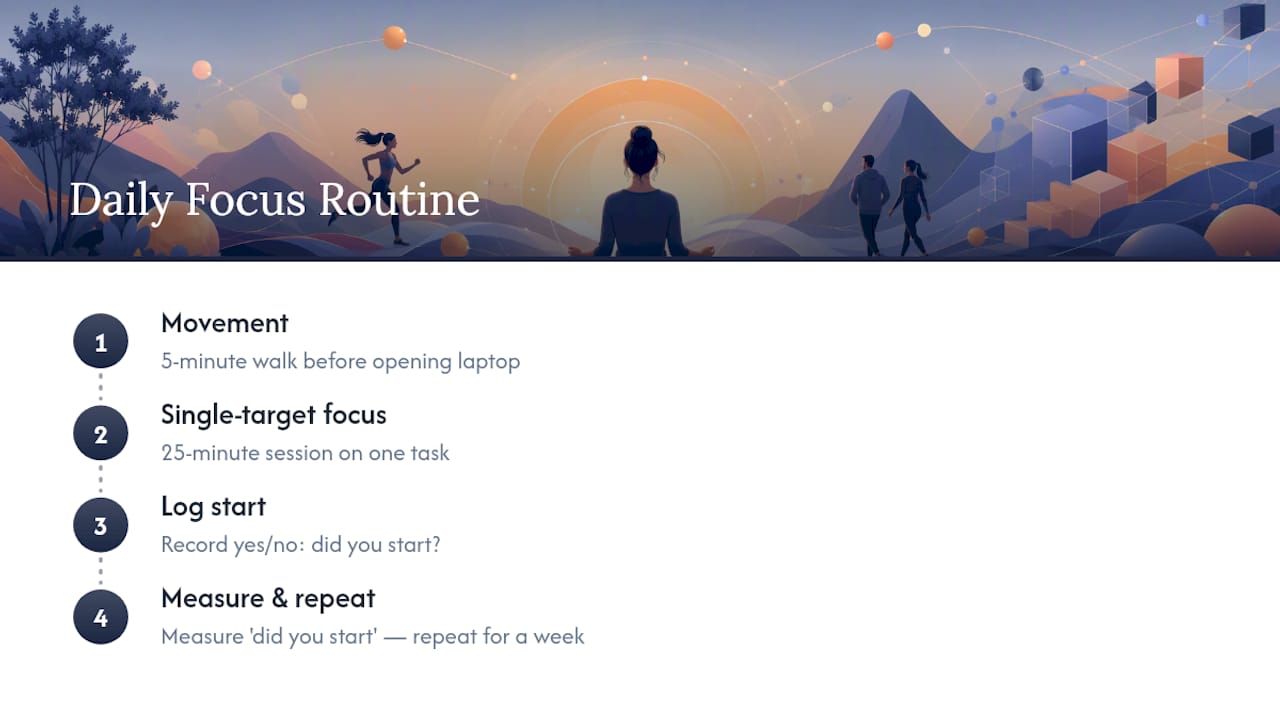
A client of Estelle’s, newly diagnosed at 34 and running her own design studio, kept abandoning her to-do list by 11am. The fix wasn’t a better list. It was a five-minute walk before opening her laptop, then a single-target focus plan for 25 minutes. Nothing else changed. Within a week, she’d finished more client work than in the prior month combined.
Try this yourself for seven days: movement, then one focus plan, once daily, logged with a simple yes or no. Measure only one thing, did you start. Pick one worksheet from this list and run it this week.
Estelle’s Workbook and Coaching: How to Get Guided Support
Worksheets get you further with someone in your corner. The Empowering ADHD Workbook for Women pairs CBT-based exercises with prompts built around the specific ways ADHD shows up for women, hormone-linked focus dips, masking fatigue, late diagnosis grief, while Estelle’s Adult ADHD Executive Function resources give adults and creatives step-by-step tools for planning, initiating, and following through on real work.
These fit best if you’re an adult, a creative freelancer, or an entrepreneur who has tried worksheets alone and stalled without accountability. That’s the gap ADHD business coaching and one-to-one sessions close: someone reviewing your focus plan with you, adjusting it when it stops working, and holding the accountability your brain didn’t come with a manual for. If you’re using an Access to Work coaching budget or exploring ADHD coaching UK options for the first time, Estelle’s Adult ADHD Executive Function page is the place to start, browse the coaching packages or download a sample worksheet to test the format before you commit to anything.
Sources
- ADHD resource bank (Doncaster Council)
- Drlewis
- Managing Executive Functioning Problems (BetweenSessions workbook)
This article is general information, not a substitute for advice from a qualified doctor. Consult a qualified healthcare professional about your own circumstances before acting on anything here.

