
Executive Function Coaching for Adults and Students Who Get Stuck
Executive Function Coaching for Adults and Students Who Get Stuck
Executive function coaching helps people who struggle with planning, time management, and follow-through build practical systems and accountability so they actually finish what they start. It’s not therapy, and it’s not a personality overhaul. It works best for adults, students, and neurodiverse people (especially those with ADHD or autism) who understand what they need to do but keep hitting a wall between the intention and the doing.
If you’ve ever written the same task on five different to-do lists and completed it on none of them, this is for you. Coaching won’t diagnose you or treat a mental health condition. If you suspect something clinical is going on, that’s a conversation for a doctor or therapist first.
- Helps with planning, starting tasks, and following through to completion
- Best suited for ADHD, autism, newly diagnosed adults, students, and self-employed creatives
- Different from therapy: it’s forward-focused, practical, and skills-based
Key Takeaways
Executive function coaching works because it replaces willpower with systems, scaffolds, and accountability that make starting and finishing tasks sustainable.
| Point | Details |
|---|---|
| Coaching targets systems, not willpower | Success comes from calendars, routines, and prompts, not trying harder. |
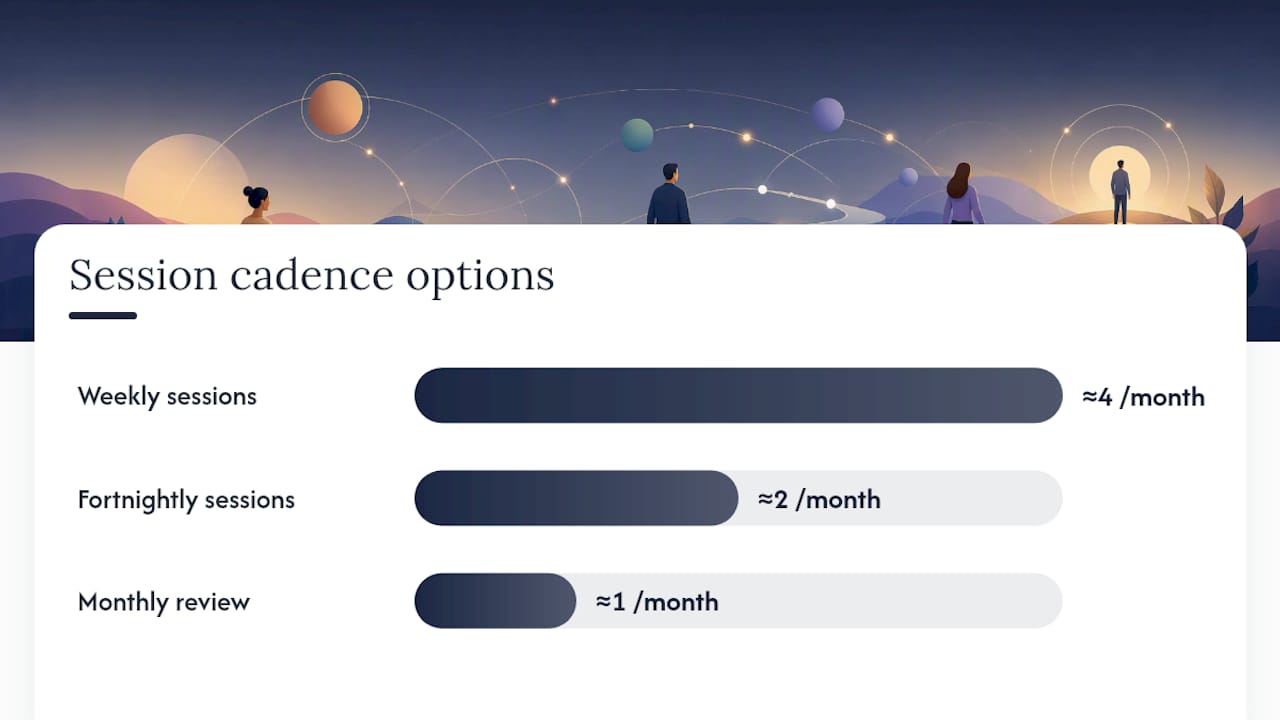
| Progress is measurable within months | Most programs run in three-month blocks with weekly sessions and monthly reviews. |
| Ask concrete questions before booking | Confirm assessment method, session rhythm, and how progress gets measured. |
| UK readers may access funding | Access to Work can help cover coaching tied to workplace performance. |
| Estelle-rose offers practitioner-led support | Coaching packages and ADHD workbooks give both guided and self-paced paths forward. |
Table of Contents
- What Does Executive Function Coaching Actually Involve?
- Who Actually Benefits From This Kind of Support?
- What Executive Function Skills Does Coaching Actually Target?
- How Does a Coaching Program Actually Work Week to Week?
- Does the Research Actually Support This Approach?
- How Do You Choose a Coach Without Getting Burned?
- What Should You Do Before Your First Session?
- A Note From Estelle on What Progress Actually Looks Like
- Ready to Build Systems That Actually Stick?
- Sources
What Does Executive Function Coaching Actually Involve?
Executive function coaching builds the systems your brain won’t build on its own. It’s not about trying harder or wanting it more. Most clients want it plenty. What they lack is the scaffolding, the structure that makes starting and finishing feel automatic instead of exhausting. A coach helps you design that scaffolding, then holds you accountable to actually using it.
In practice, this means:
- Calendars that survive contact with real life rather than color-coded systems abandoned by week two.
- Routines you’ll actually repeat, built around your energy patterns instead of an idealized 6 a.m. version of you.
- Fewer last-minute scrambles, because deadlines get broken into checkpoints you can see coming.
One thing coaching does not do: replace therapy or medication when those are indicated. If emotional regulation struggles trace back to trauma, anxiety, or untreated ADHD symptoms that need clinical attention, coaching works alongside those supports, not instead of them.
Who Actually Benefits From This Kind of Support?
You might recognize yourself here faster than you’d like to admit.
- The student who reads every assignment sheet twice and still misses the due date
- The self-employed creative who can design a stunning client project but avoids invoicing for three weeks
- The newly diagnosed adult, ADHD or autistic, trying to rebuild systems that never quite fit them
- The executive drowning in admin despite running entire teams
If therapy already has you covered emotionally but daily execution still falls apart, coaching fills that gap. Some clients run both simultaneously. A good coach will tell you plainly when a symptom pattern looks like it needs a clinician’s eye instead of a planner.
What Executive Function Skills Does Coaching Actually Target?
Coaches don’t work on “executive function” as one vague blob. They target specific skills, because vague goals produce vague results.
- Planning: breaking a project into steps before the panic sets in
- Organization: a system for where things live, physically and digitally
- Time management: estimating how long tasks really take (usually longer than you think)
- Prioritization: deciding what actually matters today, not just what’s loudest
- Working memory: offloading details onto tools instead of trying to hold them in your head
- Emotional regulation: managing the frustration spiral that stalls progress before it starts
- Task initiation and follow-through: the gap between “I should do this” and actually doing it
Improvement looks different for each skill. Better prioritization might mean you finally stop treating every email like a five-alarm fire. Better task initiation might mean you open the laptop within ten minutes of sitting down, instead of ninety.
Research on structured interventions backs this up: controlled studies show measurable improvements in planning, organization, and self-regulation when people receive targeted, practice-based support rather than generic advice. A coach usually starts by identifying your one or two weakest links, since trying to fix seven skills at once is how most people quit by week three.
How Does a Coaching Program Actually Work Week to Week?
Here’s the part people are most curious about: what actually happens once you sign up.
- Assessment first. Most coaches start with an executive function screener or intake conversation to map your specific patterns, not a generic personality quiz.
- Goal-setting. You and your coach pick one to three priorities, because trying to fix everything at once guarantees fixing nothing.
- Regular sessions. Weekly or fortnightly meetings, usually 45 to 60 minutes, keep momentum without becoming another thing to dread.
- Homework and check-ins. Between sessions, you’ll get small, specific tasks, plus asynchronous accountability like a shared planner or a quick text check-in.
Common tools include time-blocking, visual planners, breaking tasks into micro-steps small enough that starting doesn’t feel like climbing a mountain, and external prompts (alarms, sticky notes, body doubling) that do the remembering so your brain doesn’t have to.
Pro Tip: Before your first session, screenshot your calendar from the last two weeks exactly as it happened, not as you planned it. That gap between intention and reality is the most useful data your coach will ever see.
Does the Research Actually Support This Approach?
Short answer: yes, with real nuance about what “works” means.
Practice-based, scaffolded interventions consistently outperform information-only approaches when it comes to real-world transfer. Reading about time management helps almost nobody. Practicing it with structure and feedback, repeatedly, is what moves the needle.
Metacognitive strategy instruction, essentially teaching people to notice and adjust their own thinking, shows measurable gains in planning and task completion when paired with consistent practice rather than one-off lessons. Digital tools are entering this space too. Feedback tools that track attention during cognitive tasks are starting to give coaches better ways to measure progress beyond “it feels like things are going better.”
As a coach who has spent years building executive function support specifically for adult ADHD, I’ve watched the pattern hold: clients who track something concrete, missed deadlines per month, hours reclaimed from admin, tend to trust their own progress more than clients relying on vibes alone.

How Do You Choose a Coach Without Getting Burned?
Not every coach with a nice website understands ADHD brains or executive dysfunction. Here’s what separates the useful ones from the expensive disappointments.
Look for:
- Real experience with ADHD or neurodivergence, not a general life-coaching background
- A measurable process, not just “let’s talk about your goals”
- Practical tools you’ll actually use between sessions
- Clear boundaries about what’s coaching versus what needs a therapist or doctor
Ask on your discovery call:
- “What assessment or screening method do you use before we start?”
- “How often will we meet, and what happens between sessions?”
- “How will we measure whether this is actually working?”
- “What’s your cancellation policy?”
- “What’s your background or credential in ADHD or executive function specifically?”
Red flags to walk away from: promises of instant transformation, no plan for measuring progress, or vague answers about where coaching ends and therapy begins. Anyone guaranteeing you’ll be “fixed” in four sessions is selling a fantasy, not a system.
What Should You Do Before Your First Session?
Before you book anything, get three things sorted:
- Write down one to three goals. Not fifteen. Three you actually care about.
- Gather examples of what’s gone wrong. Missed deadlines, abandoned projects, the specific moments where things fell apart.
- Pick one calendar you’re willing to actually use and share with your coach.
Most programs run in roughly three-month blocks: weekly sessions, monthly reviews to check what’s sticking. That timeline isn’t arbitrary. It takes about that long for a new system to survive your inevitable bad weeks.
On cost: coaching is typically sold either hourly or in packages, with packages usually working out cheaper per session and building in accountability between meetings. A typical package includes the assessment, weekly or fortnightly sessions, and some form of ongoing support like planner templates or check-ins, which matters more than the hourly rate alone.
If you’re in the UK and coaching supports your work performance, it’s worth exploring whether Access to Work can fund part of it. This government program can cover workplace adjustments and practical support for disabled employees, and a coach experienced with the application process can save you hours of confusion.
A Note From Estelle on What Progress Actually Looks Like
Early wins in coaching rarely look dramatic. They look like sending an invoice on time for once, or noticing you started a task without the usual twenty minutes of dread first. I’ve watched entrepreneurs and creatives build entire businesses around systems that finally fit how their brains actually work, not how a productivity book insisted they should.
Progress isn’t linear, and anyone promising a straight line is lying to you. Give it real time, and be kind to yourself on the weeks that wobble.
— Estelle
Ready to Build Systems That Actually Stick?
If you’ve read this far, you already know the theory. What you need now is someone in your corner who’s lived this work, not just studied it. Estelle-rose offers ADHD business coaching built specifically for creatives and impact-driven entrepreneurs, paired with practical, downloadable ADHD workbooks for anyone who wants tools between sessions or instead of them.
A discovery call gets you a real conversation about your specific executive function struggles, no generic script, and a clear sense of whether coaching or a self-guided workbook fits your situation better right now. If you’re navigating workplace adjustments through Access to Work, mention it upfront so the call can address funding options too.
Pro Tip: Before your discovery call, write down the single task you’ve avoided longest. That one example tells a coach more about your patterns than a full history ever could.
Book your discovery call through Estelle-rose’s coaching page and find out what a system built around your actual brain feels like.
Sources
- Interventions to improve executive functioning — PMC
- Metacognitive strategy instruction and executive function outcomes (ERIC)
- Digital tool gives kids feedback on attention during cognitive tests — Stanford Medicine
- Gov

