
ADHD routines that work: strategies for real progress
ADHD routines that work: strategies for real progress
TL;DR:
- Flexible, personalized routines help adults with ADHD reduce decision fatigue and stress.
- Building consistent triggers and visual cues supports automation and task initiation.
- Ongoing adjustments and self-compassion are key to maintaining sustainable routines.
Many adults with ADHD hear the word “routine” and feel immediate resistance. The assumption is that routines are rigid, demanding, and built for neurotypical brains. That assumption is wrong. Flexible, personalized routines are one of the most effective tools available for managing adult ADHD symptoms. They reduce decision fatigue, support focus, and lower daily stress. This guide breaks down why routines work for the ADHD brain, what elements matter most, how to build sustainable structure, and how to recover when things fall apart.
Table of Contents
- Why routines matter for adults with ADHD
- How routines improve productivity and reduce overwhelm
- Essential elements of an ADHD-friendly routine
- Overcoming routine fatigue: Making structure sustainable
- A real-world view: What most ADHD routine advice gets wrong
- Support and tools for creating routines that work for you
- Frequently asked questions
Key Takeaways
| Point | Details |
|---|---|
| Routines reduce daily stress | Personalized routines can lessen decision fatigue and help manage ADHD symptoms day to day. |
| Flexibility is crucial | Effective routines adapt to your life changes and energy levels instead of enforcing rigid schedules. |
| Consistent cues build momentum | Visual reminders and simple steps make it easier to form habits that support productivity. |
| Compassion supports success | Expect resets and forgive yourself to keep moving forward with routine-building. |
Why routines matter for adults with ADHD
Routines matter because the ADHD brain spends significant energy on decisions that other brains process automatically. Choosing what to do next, when to do it, and how to start are all cognitive tasks. Each one draws on executive function and ADHD resources that are already limited. When a routine handles those decisions in advance, the brain has more capacity for actual work.
Structured environments also provide external cues that the ADHD brain relies on. Without those cues, it is easy to lose track of time, forget tasks, or shift into hyperfocus on the wrong thing. Predictable sequences reduce that risk.
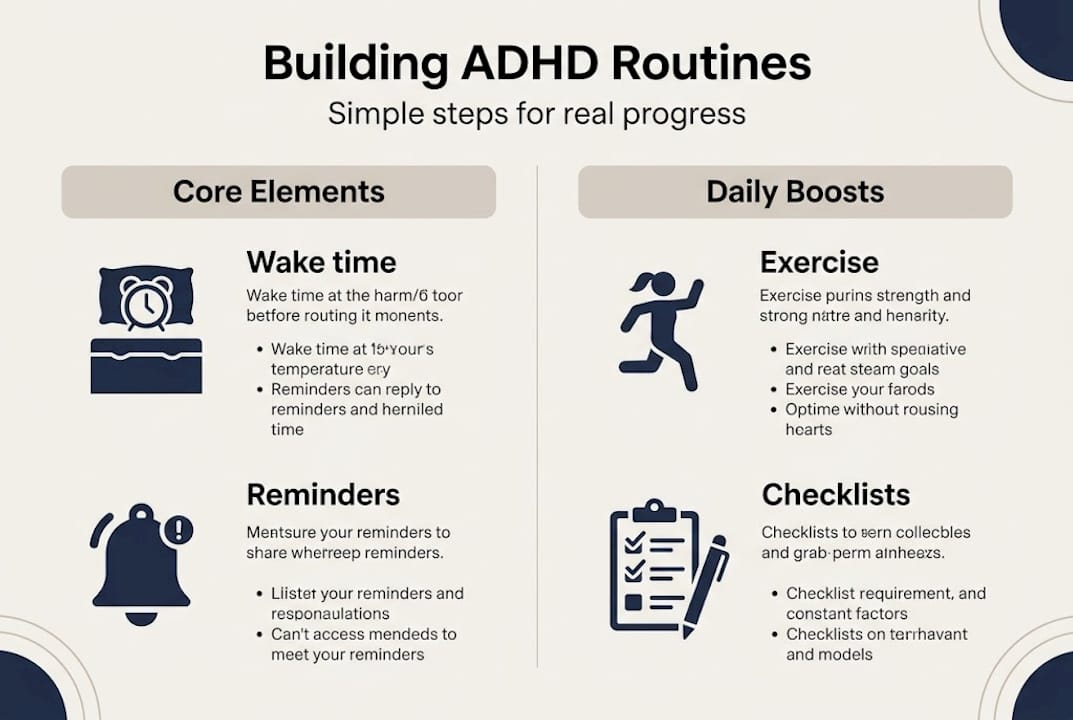
The evidence supports this. A meta-analysis of 32 studies found that structured interventions, including cognitive behavioral therapy and regular exercise, produced measurable improvements in planning, organization, and time management for adults with ADHD. Exercise in particular was shown to boost executive function directly.
Routines that work for ADHD are not rigid schedules. They are flexible frameworks. Here is what they typically include:
- Consistent start times for key activities
- Visual or auditory cues to trigger transitions
- Short task blocks with built-in breaks
- Predictable sequences that reduce the need to decide
- Room for adjustment without abandoning the whole structure
“The goal is not a perfect schedule. The goal is a reliable enough sequence that your brain stops wasting energy figuring out what comes next.”
Flexibility is not a compromise. For neurodivergent adults, it is a requirement. A routine that collapses the moment one thing changes is not a useful routine. Build in buffer time. Expect variation. That is not failure; that is design.
How routines improve productivity and reduce overwhelm
When routine behaviors become automatic, the mental effort required for basic tasks drops significantly. You stop deliberating over whether to check email before or after breakfast. You stop negotiating with yourself about when to start work. The sequence runs, and you follow it.
This matters most for self-care, workspace setup, and work planning. These are the categories where adults with ADHD most often lose time and energy. Automating them through routine frees up cognitive resources for higher-priority tasks.
Here is a direct comparison of a day with and without a structured routine:
| Factor | With routine | Without routine |
|---|---|---|
| Morning start time | Consistent | Variable, often late |
| Task initiation | Triggered by cue | Requires active effort |
| Stress level by midday | Lower | Higher |
| Tasks completed | More predictable | Inconsistent |
| Energy at end of day | More reserved | Often depleted |
The difference is not motivation. It is structure. ADHD organization methods that reduce the number of daily choices have a direct impact on how much gets done.
To build productive routines, follow these steps:
- Identify your two or three highest-priority daily tasks.
- Assign each a fixed time slot tied to an existing habit.
- Set a timer or alarm to signal the start of each block.
- Use a checklist to track completion without relying on memory.
- Review what worked at the end of each week and adjust.
Pro Tip: Use your phone’s calendar or a dedicated app like Routinery or Structured to scaffold new habits. Visual and auditory reminders reduce the effort needed to start tasks and keep sequences on track. ADHD coaching tips often emphasize that the tool matters less than using it consistently.
Essential elements of an ADHD-friendly routine
Not all routine elements carry equal weight. Some have a stronger impact on ADHD symptoms than others. Knowing which ones to prioritize saves time and increases results.
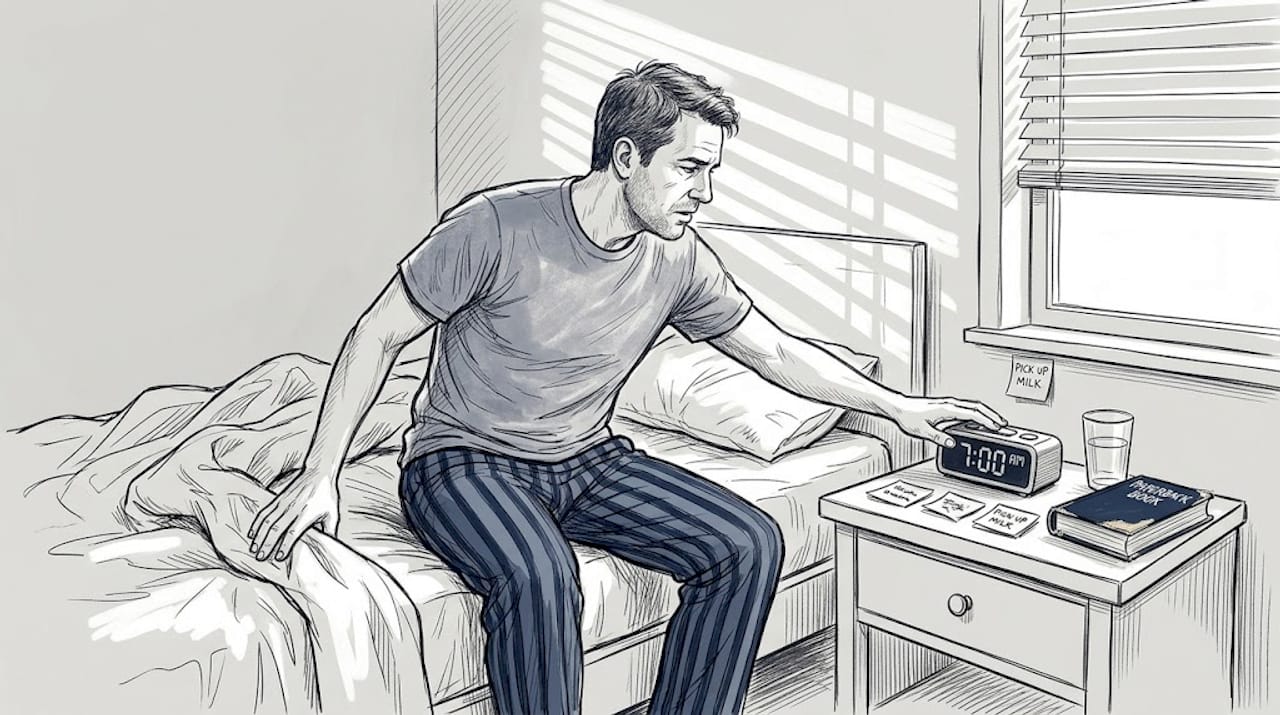
Consistent wake times are foundational. Waking at the same time each day stabilizes circadian rhythm and reduces the cognitive drag that comes from irregular sleep. This single habit has downstream effects on focus, mood, and task initiation throughout the day.
Physical activity, even light movement, functions as a catalyst. A meta-analysis of 32 studies confirmed that exercise directly improves executive function skills in adults with ADHD. A 10-minute walk after waking is enough to shift brain chemistry in a useful direction.
Visual reminders and checklists support working memory, which is consistently weaker in ADHD brains. Writing tasks down or using an app removes the burden of holding information in your head.
Here is a data table showing the most impactful routine elements as reported by adults with ADHD:
| Routine element | Reported impact | Ease of implementation |
|---|---|---|
| Consistent wake time | High | Moderate |
| Morning physical activity | High | Moderate |
| Visual task checklist | High | Easy |
| Task batching by type | Moderate | Easy |
| Scheduled breaks | Moderate | Easy |
| Evening wind-down sequence | Moderate | Moderate |
| Brain-boosting foods at set meal times | Moderate | Easy |
Additional elements worth building into your routine:
- A defined workspace that signals “work mode” to your brain
- A short shutdown ritual at the end of the workday
- A weekly planning session of 15 to 20 minutes
- Task batching, grouping similar tasks together to reduce context switching
Start with two or three elements. Add more only after those feel stable. Trying to implement everything at once is one of the most common reasons routines fail.
Overcoming routine fatigue: Making structure sustainable
Routine fatigue is real. There will be stretches of days or weeks where the structure that worked perfectly last month feels impossible to follow. This is not a character flaw. It is a predictable pattern for adults with ADHD.
Expecting this makes it easier to manage. When a routine stops working, the goal is not to push harder. The goal is to adjust and restart. Routines should evolve with your life. A routine built for a remote work schedule may not survive a return to the office. That is expected. Revise it.
Here are strategies that help sustain routines over time:
- Set a low bar for “success.” Completing 60% of a routine is still progress.
- Build in off days intentionally rather than waiting for them to happen.
- Reward consistency in small, immediate ways.
- Use a habit tracker to make streaks visible without making them feel punishing.
- Revisit your routine every four to six weeks and update it based on what is actually happening in your life.
The ADHD workbook strategies that tend to produce lasting change are the ones that treat routine-building as an ongoing process, not a one-time setup. Women’s ADHD empowerment resources often highlight this point: sustainable progress requires self-compassion as much as strategy.
A meta-analysis of 32 studies found that consistent engagement with structured behavioral strategies, even imperfect engagement, produced better outcomes than waiting for perfect conditions.
Pro Tip: Anchor new habits to activities you already do every day without thinking. Brushing your teeth, eating breakfast, and showering are reliable anchors. Attach a new behavior directly before or after one of these, and the existing habit becomes the trigger.
A real-world view: What most ADHD routine advice gets wrong
Most ADHD routine guides present a polished system and imply that following it consistently is simply a matter of commitment. That framing is inaccurate and, for many adults, discouraging.
The real pattern seen in adults who make lasting progress is not consistent adherence. It is persistent return. They miss days. They abandon routines for weeks. Then they come back, adjust, and keep going. That cycle is not failure. It is the actual process.
Conventional advice also underestimates how much external structure matters. Telling someone with ADHD to “just be more disciplined” ignores the neurological reality. What works is building adaptive approaches to ADHD routines that account for variable motivation, energy, and life circumstances.
Celebrating partial wins is not lowering the bar. It is accurate accounting. If you completed your morning routine three out of five days this week, that is three more days of structure than you had before. That counts. Start small, iterate often, and measure progress against your own baseline, not an idealized version of what a routine should look like.
Support and tools for creating routines that work for you
Building routines that actually hold is easier with the right support. Generic productivity advice rarely accounts for how the ADHD brain works. Specialized guidance does.
ADHD executive function coaching provides targeted strategies for the specific areas where routine-building breaks down most often: task initiation, time blindness, and follow-through. ADHD coaching programs offer structured accountability alongside practical tools. For hands-on support with daily organization, organization and cleaning support resources translate routine principles into step-by-step systems. These options exist because routines are not one-size-fits-all, and neither is the support that helps them stick.
Frequently asked questions
What are the best routines for adults with ADHD?
The best routines for adults with ADHD are simple, flexible, and anchored to existing daily activities. Structured behavioral strategies that include visual reminders and built-in rewards consistently produce the strongest results.
How can I stick to routines when I keep losing motivation?
Motivation will fluctuate; that is normal for ADHD. Build routines that work at low-energy levels too, and use reminders or accountability partners to reduce reliance on motivation alone.
Can starting a routine help with ADHD symptoms quickly?
You may notice reduced stress and better task initiation within a few days. However, lasting routine benefits develop gradually and require consistent adjustment over time.
What if I keep failing to follow my routines?
Routine disruption is expected, not exceptional. Focus on restarting with a simpler version of your routine rather than aiming for the perfect sequence you had before.

