
How coaching drives real ADHD recovery for adults
How coaching drives real ADHD recovery for adults
TL;DR:
- Adult ADHD coaching provides practical structure and accountability beyond medication and therapy.
- Coaching helps develop skills like task initiation, time management, and routine building for lasting recovery.
- Finding the right coach involves evaluating experience, structure, and personal chemistry for effective support.
Getting an ADHD diagnosis as an adult can feel like the ground shifts under you. Suddenly, years of struggles with focus, organization, and follow-through have a name. But a diagnosis alone does not fix anything. Medication helps many people, and therapy addresses emotional pain, yet a large number of adults still find themselves stuck. Medication alone may not address all facets of ADHD, and that gap is exactly where coaching steps in. This article breaks down how ADHD coaching works, what it delivers, and how to find the right coach to move your recovery forward.
Table of Contents
- Understanding ADHD recovery: Beyond medication and therapy
- What does an ADHD coach do?
- Key benefits of ADHD coaching for recovery
- How to find and choose an ADHD coach
- Why coaching may be the missing link in adult ADHD recovery
- Kickstart your ADHD recovery with expert coaching
- Frequently asked questions
Key Takeaways
| Point | Details |
|---|---|
| Coaching fills treatment gaps | ADHD coaching gives adults daily support where medication and therapy often fall short. |
| Practical, personalized strategies | A coach helps break goals into manageable steps and keeps you on track. |
| Measured improvement | Research shows adults who use coaching report higher productivity and satisfaction. |
| Finding the right fit is crucial | Success depends on a coach with specific ADHD expertise and a personal approach that suits you. |
Understanding ADHD recovery: Beyond medication and therapy
ADHD recovery is not about eliminating ADHD. It is about building the skills and systems that let you function well despite it. Recovery means managing symptoms consistently, developing reliable daily routines, and improving your overall quality of life. That is a wide target, and no single treatment covers all of it.
Medication is often the first step, and for good reason. Stimulant medications can sharpen focus and reduce impulsivity. But they do not teach you how to organize your workspace, plan a project, or stop procrastinating on tasks that feel overwhelming. Therapy, particularly cognitive behavioral therapy, helps you process shame, anxiety, and the emotional weight of years of struggling. That work matters. But therapy sessions rarely focus on the practical question: what do you do tomorrow morning when you sit down to work?
This is where many adults hit a wall. The clinical supports are in place, but daily execution still falls apart. Consider what executive function in ADHD actually involves: planning, initiating tasks, managing time, and sustaining effort. These are the exact skills ADHD disrupts most. Medication and therapy do not directly train these skills.
Common gaps adults report even after starting treatment include:
- Difficulty starting tasks even when motivation exists
- Losing track of deadlines and appointments
- Struggling to maintain routines beyond a few days
- Feeling overwhelmed by large projects with no clear first step
- Inconsistent follow-through on personal and professional goals
“ADHD coaching fills in the gaps left by medication and therapy by providing structure and accountability.” This is not a replacement for clinical care. It is a practical layer that sits on top of it.
Understanding what ADHD coaching involves makes it easier to see why so many adults describe it as the piece that finally made everything else work. Coaching is direct, action-focused, and built around your specific life.
What does an ADHD coach do?
An ADHD coach is not a therapist, and they are not a mentor. The role is distinct, and understanding that distinction helps you get the most out of the relationship.
Therapists focus on mental health, emotional regulation, and past experiences. Mentors share expertise and advice based on their own career path. Coaches focus on where you are now, where you want to go, and the specific steps that get you there. Here is a quick comparison:
| Role | Primary focus | Approach | Typical outcome |
|---|---|---|---|
| Therapist | Emotional health | Reflective, exploratory | Reduced anxiety, processed trauma |
| Mentor | Career guidance | Advice-based | Professional direction |
| ADHD Coach | Daily function and goals | Action-based, structured | Habit formation, goal completion |
In a typical coaching session, you might review what you planned to do since the last session, identify what worked and what did not, and then set specific, manageable actions for the coming week. The coach helps you break large goals into steps small enough to actually start. They ask questions that surface what is blocking you. They hold you accountable without judgment.
Accountability is especially powerful for adults with ADHD. Knowing that someone will check in on your progress activates a sense of external structure that the ADHD brain often needs. Many adults report that they complete tasks for their coach that they would never complete for themselves alone.
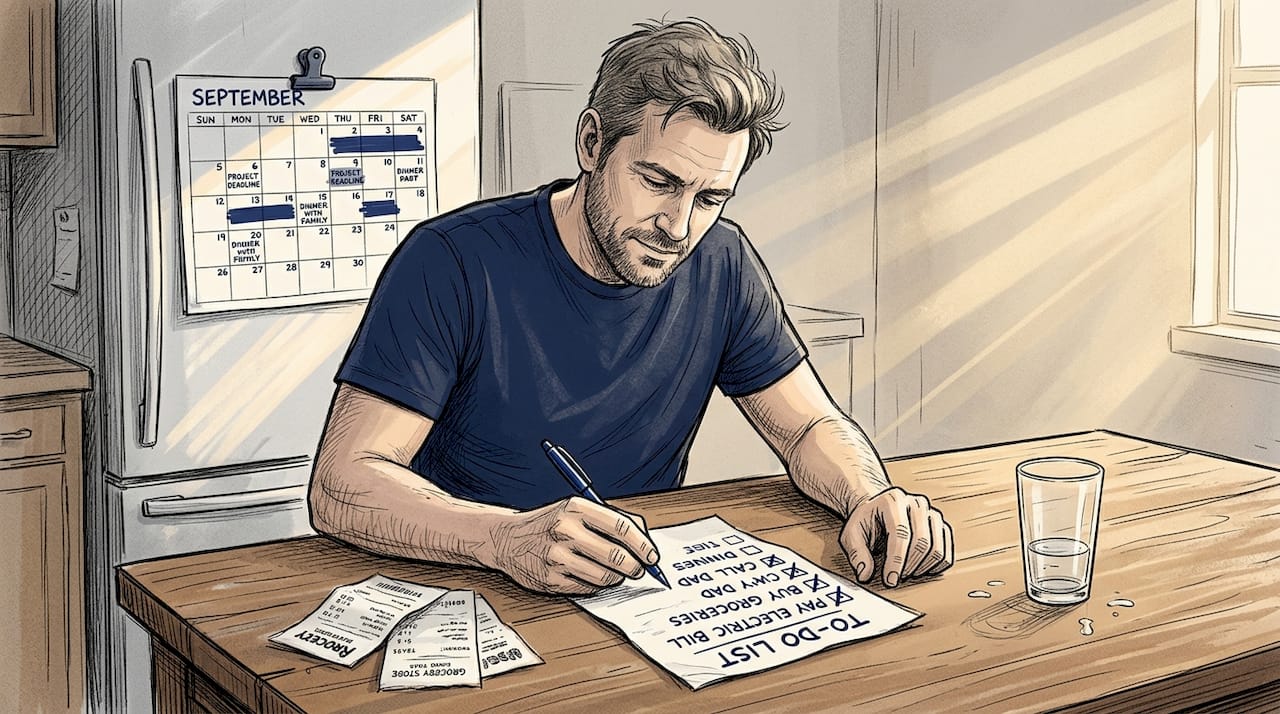
A real-world example: a client wants to launch a freelance business but cannot get past the planning stage. A coach helps them identify the three actions needed this week, not the 30 actions needed eventually. They check in mid-week by message, then review progress in the next session. That cycle of plan, act, review is what coaching provides in concrete terms.
If you are looking at organization coaching for ADHD, the same principle applies: small steps, regular check-ins, and building executive function skills over time.
Pro Tip: Before committing to a coach, ask them to walk you through exactly how they track your progress between sessions. The answer tells you a lot about how structured and practical their approach really is. You can also review ADHD coaching benefits to know what to expect going in.
Key benefits of ADHD coaching for recovery
Adults who engage with ADHD coaching report measurable improvements across several areas of life. The increased productivity and life satisfaction reported by coaching clients is backed by research, not just anecdote.
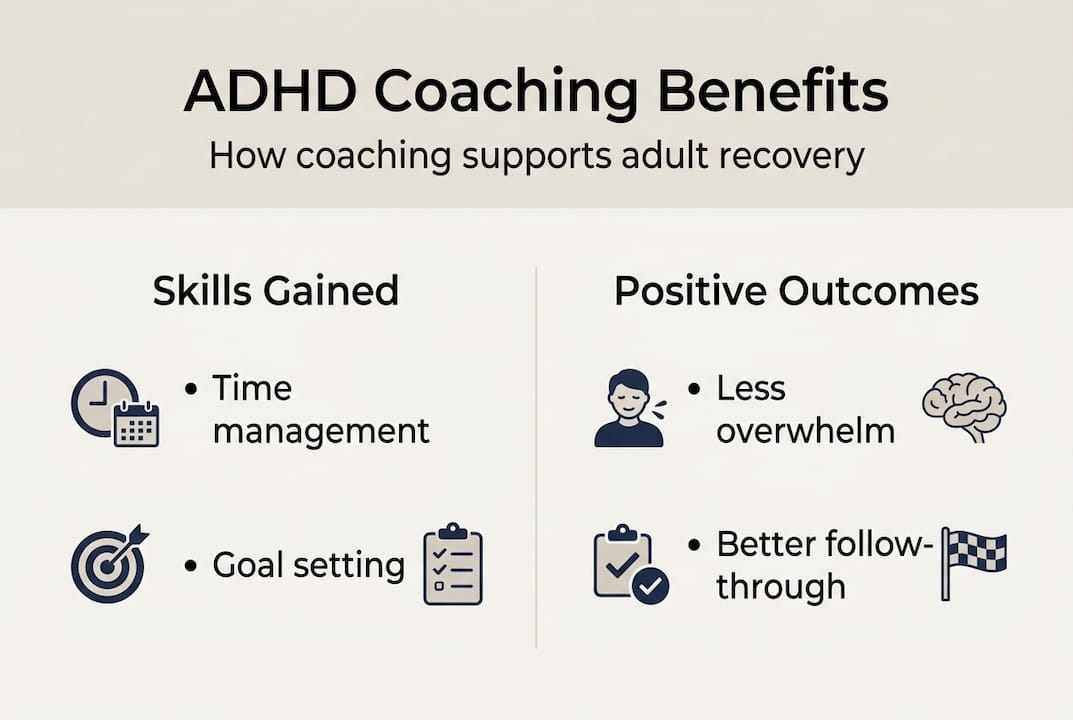
Here is what the data looks like across commonly tracked outcomes:
| Outcome area | Adults reporting improvement |
|---|---|
| Time management | 72% |
| Goal completion | 67% |
| Reduced overwhelm | 65% |
| Improved organization | 61% |
| Overall life satisfaction | 58% |
These numbers come from adult ADHD coaching research that has tracked client outcomes across structured coaching programs. The pattern is consistent: regular coaching sessions produce real, measurable change.
The most impactful strategies coaches use include:
- Breaking large goals into weekly micro-tasks
- Using body doubling and co-working sessions for focus
- Building morning and evening anchor routines
- Applying time-blocking to reduce decision fatigue
- Regular progress reviews to adjust strategies in real time
Each of these strategies targets a specific ADHD challenge. Time-blocking, for example, reduces the constant mental negotiation over what to do next. Anchor routines create automatic behavior chains that do not require willpower to start.
If you want structured tools to practice these strategies on your own, ADHD workbook strategies can support the work you do between coaching sessions. And reading success stories in ADHD coaching from people who have been through the process can make the possibility feel real rather than abstract.
Stat callout: Adults working with a coach report completing up to 40% more of their weekly goals compared to self-directed attempts alone.
How to find and choose an ADHD coach
Finding the right coach is a practical process. Start with credible sources and narrow from there.
Where to search:
- Professional directories such as certified ADHD coaches list coaches by specialty and location
- Referrals from your diagnosing clinician or therapist
- Online platforms that specialize in neurodivergent support
- ADHD community groups, both local and online
Credentials to look for include training from recognized ADHD coaching programs and experience working specifically with adults. General life coaching is not the same as ADHD-specialized coaching. The difference in outcomes can be significant.
Questions to ask in a first conversation:
- How do you structure sessions and track progress between them?
- What experience do you have with adults who have similar challenges to mine?
- How do you adjust your approach when a strategy is not working?
- What does success look like after three months of working together?
Red flags to watch for include coaches who promise quick fixes, do not ask about your specific challenges, or cannot explain how they measure progress. Vague answers to direct questions are a signal to keep looking.
Choosing the right ADHD coach can significantly alter the impact coaching has on your recovery. Do not rush this decision. Take time to explore supportive ADHD resources while you search, and treat the first session as a mutual interview.
Pro Tip: Chemistry matters more than credentials in many cases. If a coach’s style feels like a match for how you think and communicate, that fit will carry you further than a resume full of certifications.
Why coaching may be the missing link in adult ADHD recovery
Most adults with ADHD receive a diagnosis, a prescription, and maybe a referral to therapy. That is the standard path. But standard is not the same as sufficient.
The honest reality is that medication and therapy address what ADHD is and how it feels. Coaching addresses what you actually do about it, today, in your real life. That is a different kind of support, and it fills a gap that clinical treatment was never designed to cover.
Many adults only realize what is possible after working with a coach. Not because coaching is magic, but because it provides consistent, practical guidance at the exact point where executive function challenges create the most friction: the moment of doing.
Conventional wisdom underrates this. There is a tendency to treat coaching as optional, a luxury for people who have already figured out the basics. That view gets it backwards. Coaching is often most valuable at the beginning of recovery, when new habits are fragile and external structure makes the biggest difference. Adults who invest in coaching early tend to build momentum faster and sustain it longer.
Kickstart your ADHD recovery with expert coaching
Understanding the role of coaching is one thing. Taking action is another.
If you are ready to move beyond diagnosis and start building real skills, specialized coaching can make that process faster and more sustainable. Whether your focus is executive function coaching, structured support through ADHD programs for women, or finding a starting point that fits your life, the resources are available. The most important step is the first one. Visit estelle-rose.com to explore coaching options, programs, and tools built specifically for adults navigating ADHD recovery.
Frequently asked questions
What is the difference between ADHD coaching and therapy?
ADHD coaching focuses on practical skills, daily routines, and goal completion, while therapy addresses emotional and mental health challenges. Coaching is action and accountability driven, while therapy deals with emotional regulation and past experience.
Is ADHD recovery possible without coaching?
Some people improve with medication and therapy alone, but coaching accelerates progress by building new habits and consistent accountability. Coaching complements medical approaches for a more complete recovery outcome.
What results can I expect from working with an ADHD coach?
You can expect better time management, reduced overwhelm, and more consistent progress toward your goals. ADHD coaching improves quality of life and personal productivity across multiple areas.
How long does it take to see results from ADHD coaching?
Many adults notice meaningful changes in routines and mindset within several weeks of starting regular sessions. Consistent coaching sessions help clients develop sustainable new habits more quickly than self-directed efforts alone.

