
11–12 Session Neuro Affirming Task Initiation Coaching, ADHD Adults
11–12 Session Neuro Affirming Task Initiation Coaching, ADHD Adults
Task initiation coaching helps many adults, especially those with ADHD, start tasks more reliably by teaching micro-steps, building accountability, and redesigning the environment around a task. The immediate next step is small: pick one task and do a two-minute version of it right now. If that feels impossible alone, a free introductory session with an ADHD coach can show you whether structured coaching fits your situation.
TL;DR:
- Coaching focuses on creating tiny, specific steps and external supports to reduce the mental and environmental barriers to starting tasks.
- Techniques like micro-commitments, if-then plans, body doubling, and environmental prep can significantly improve task initiation, especially for ADHD adults.
- Evidence shows that structured coaching programs with about 11 to 12 sessions lead to measurable, long-lasting improvements in executive functioning and task follow-through.
- Choosing the right coach involves assessing training, compatibility, and the approach’s neuro-affirming nature rather than credentials alone.
- Funding options like Access to Work may cover workplace coaching costs for eligible adults with ADHD in the UK.
Table of Contents
- What Task Initiation Actually Means
- Why Starting Feels So Hard
- How Task Initiation Coaching Works
- Techniques You Can Try Today
- What Coaching Actually Delivers
- How to Choose the Right Coach
- A Short Note From Estelle on Starting Small
- How Estelle’s Coaching Can Help You Start
- FAQ
- Sources
What Task Initiation Actually Means
Task initiation is the executive function skill that lets you move from deciding to do something to actually doing it. It is not the same as motivation. Motivation is a feeling, often absent even when the task matters. Task initiation is the mechanical act of generating a “go” signal and lowering the friction standing between you and the first move.
Someone can want to write a report, know exactly how to do it, and still sit staring at a blank screen for an hour. That gap is a task initiation problem, not a willpower problem. It shows up as unanswered emails, unopened mail, unloaded dishwashers, and half-finished forms, tasks that are rarely hard, just hard to begin.
Why Starting Feels So Hard
Several things get in the way at once. Cognitively, an unclear first step, poor sense of time, or a mind already overloaded with other demands can stall a task before it starts. Emotionally, avoidance, fear of getting it wrong, or perfectionism turn a simple task into something to dodge.
Environment plays a role too: a cluttered desk, a phone within reach, or too many competing decisions all raise the mental cost of beginning. For adults with ADHD, the internal cue that normally says “start now” is often weaker or less consistent, which is why many ADHDers describe orbiting a task for days, circling it, thinking about it, dreading it, without ever landing on it, a common challenge explored in ADHD and coordination disorders: Helping your child thrive.
None of these causes are a character flaw. They are specific, identifiable barriers, and that specificity is exactly what makes coaching useful instead of vague.
How Task Initiation Coaching Works
Coaching targets the actual mechanics of starting rather than offering generic encouragement. A coach typically works with a client to design a micro-step so small it barely counts as the task itself: opening the document, putting on running shoes, writing one sentence. These are often paired with implementation intentions, a simple “if this, then that” plan (“if it’s 9 a.m., then I open the spreadsheet”) that removes the need to decide in the moment.

Coaches also build external systems a client can lean on instead of willpower: scheduled check-ins, accountability partners, and body doubling, where another person is present (in person or on a video call) while the client works. Practices like these are commonly used in coaching because they lower the friction of starting, and effective programs tend to focus on building these external supports rather than asking clients to simply try harder, according to Oxford Health’s coaching guidance.
A piece that gets less attention is the relationship itself. The working alliance between coach and client, how well they understand each other and how safe the client feels being honest about what isn’t working, is described as a strong predictor of whether coaching succeeds. That is why a neuro-affirming approach, one that treats ADHD traits as differences to work with rather than flaws to fix, tends to matter more than any single technique.
Techniques You Can Try Today
Most task initiation strategies work by shrinking the task or by adding something external to replace a missing internal cue. A few are worth testing this week.
- Micro-commitments: break the task into a first action so small it feels almost pointless, like opening the file or writing a title.
- If-then plans: decide in advance exactly when and where you’ll start, removing the moment of choice.
- Body doubling: work alongside someone else, in person or over video, since having a witness tends to lower the urge to drift.
- Short timers: set five minutes on a clock and agree to stop guilt-free when it rings, which is often enough to break the freeze.
- Environmental prep: lay out materials, close unrelated tabs, and put your phone in another room before you try to start.
- Apps and blockers: website blockers and task-timer apps can substitute for willpower, though the right one depends on what actually distracts you.
A piece of commentary in The Conversation puts it plainly: procrastination is often mislabeled as laziness when the real fix is lowering the cost of starting, through smaller steps and better-structured schedules, not trying harder.
Pro Tip: Stack two techniques at once, like a five-minute timer plus body doubling, since the effect tends to compound rather than simply add up.
What Coaching Actually Delivers
Manualized ADHD coaching programs, often run over 11 to 12 sessions, have been studied in randomized controlled trials and prospective studies. These show statistically significant, moderate-to-strong improvements in executive functioning and real-world outcomes, with gains still present at three-month follow-up, according to a coaching interventions study on PMC. That 11 to 12 session structure is a research standard rather than a fixed rule, but it’s a useful planning benchmark if you’re deciding how much to commit to.
Coaching formats vary: some adults prefer one-to-one sessions, others do better in group formats where body doubling happens naturally. Most programs run weekly or biweekly over a period of a few months rather than being a one-off fix.
Expect measurable gains in how often you start tasks and follow them through, not a personality overhaul. Results vary by person, which is part of why the fit between coach and client matters as much as the method itself.

How to Choose the Right Coach
Picking a coach is less about credentials alone and more about whether the working relationship will hold up when things get hard.
- Check training first: look for ADHD-specific training and a recognized coaching credential such as ICF accreditation.
- Book a chemistry session: most coaches offer a free introductory call, and Oxford Health specifically recommends using it to judge whether the approach feels neuro-affirming.
- Ask direct questions: how do they approach task initiation specifically, how do they measure progress, how often will you meet, and how is confidentiality handled.
- Watch for red flags: vague descriptions of method, guarantees of total transformation, or no clear session structure are signs to look elsewhere.
- Ask about funding: in the UK, Access to Work can fund workplace-related coaching for people in paid work whose disability, including ADHD, affects their ability to work, provided they are 16 or older and either employed or about to start or return to work within 12 weeks.
A Short Note From Estelle on Starting Small
I once spent four days avoiding a single phone call. On day five, I gave myself permission to just dial the number and hang up if I panicked. I didn’t hang up. The call took six minutes.
That’s the whole secret: consistency beats intensity, every time. If you’re stuck, try a chemistry call. The research backing coaching is real, and so is the relief of finally starting.
— Estelle
How Estelle’s Coaching Can Help You Start
If starting is the problem, a structured coaching relationship built around your specific patterns tends to work better than another productivity app. Estelle’s ADHD Business Coaching for Impact-Focused Entrepreneurs and Creative Freelancers is built for self-employed adults and creatives who need practical initiation strategies, not generic business advice.
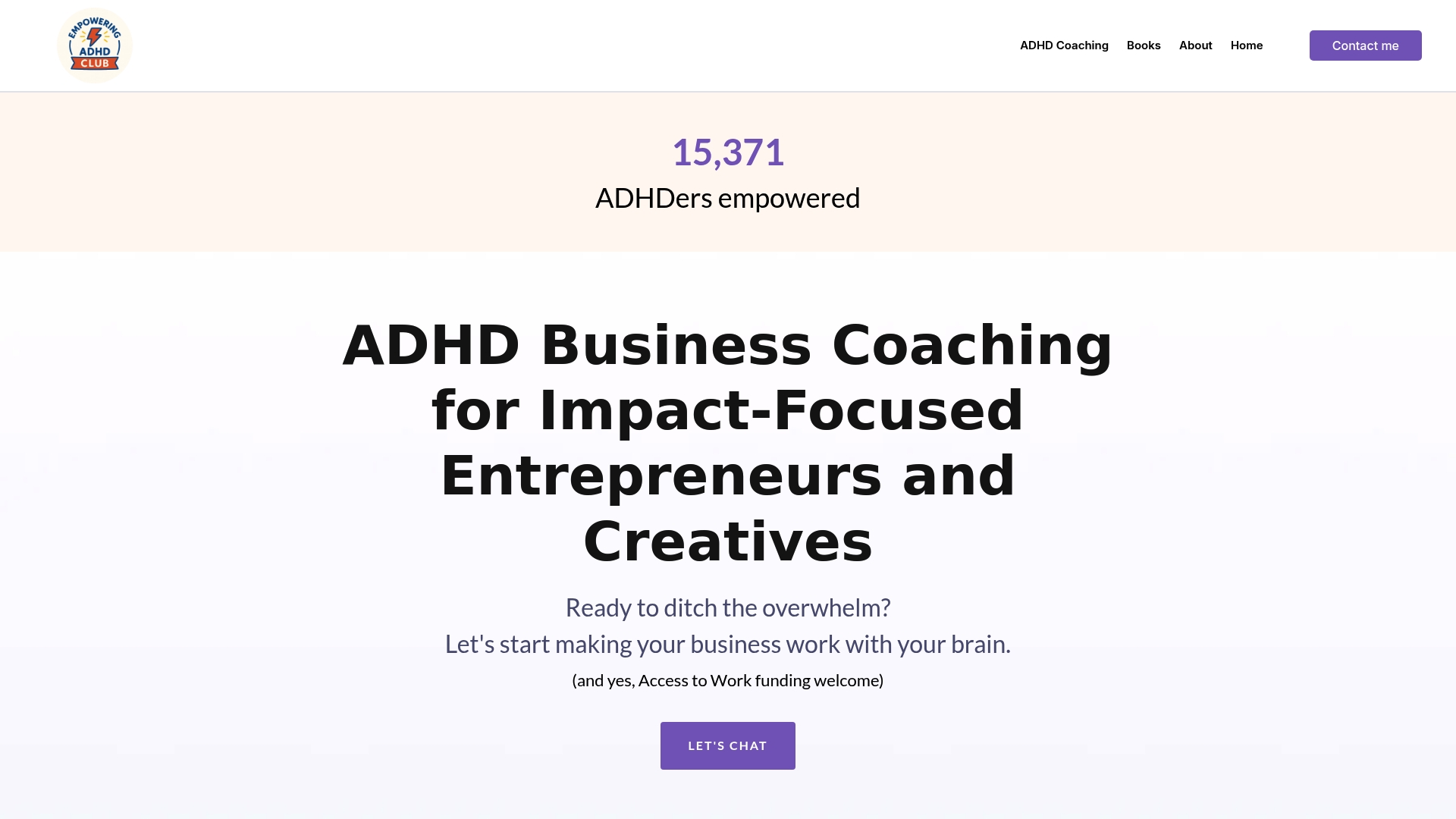
- ADHD Business Coaching for freelancers and impact-focused founders who need real accountability.
- Adult ADHD Executive Function 7-Week Power-Up, a structured program for building initiation and follow-through skills.
- Empowering ADHD workbooks, for readers who want self-directed tools alongside or instead of sessions.
A chemistry call is the first step: it’s a short, no-obligation conversation to see whether the approach fits before you commit to a package. If you’re employed in the UK, Access to Work may cover part of the cost. Start with a conversation about coaching.
This article is general information, not a substitute for advice from a qualified doctor. Consult a qualified healthcare professional about your own circumstances before acting on anything here.
FAQ
How do you teach task initiation?
Coaches teach task initiation by breaking a task into a tiny first action, pairing it with an if-then plan, and adding external supports like body doubling or scheduled check-ins. The focus stays on lowering the cost of starting rather than demanding more willpower.
Do people with ADHD struggle with task initiation?
Yes, difficulty generating the internal “go” signal is a well-recognized ADHD trait, which is why many ADHDers describe circling a task for days without starting it. ADHD-specific coaching and practical supports like reminders and structured routines are commonly recommended to address it.
Why is starting a task so hard?
Starting is hard because of a mix of unclear next steps, time-blindness, emotional avoidance, and distracting environments, all of which raise the mental cost of beginning. For many adults, especially those with ADHD, the barrier is practical and cognitive rather than a lack of effort or care.
How can coaching help with ADHD task initiation specifically?
ADHD-focused coaching builds personalized micro-steps and external accountability systems, such as body doubling and scheduled sessions, that substitute for a weaker internal start cue. Manualized coaching programs running 11 to 12 sessions have shown measurable improvements in executive functioning, according to research published on PMC.
Can Access to Work pay for ADHD coaching?
Access to Work can fund workplace-related coaching for eligible adults in paid work whose disability, including ADHD, affects their ability to do their job. Eligibility requires living and working in England, Scotland, or Wales and being 16 or older, according to Gov.

