
Types of ADHD Accommodations for Better Work Performance
Types of ADHD Accommodations for Better Work Performance
TL;DR:
- Adults with ADHD often understand their capabilities but face workplace structures that mismatch their brain function.
- Effective accommodations, such as noise-canceling headphones, flexible hours, and frequent feedback, help bridge this gap without stigma.
Adults with ADHD often know exactly what they’re capable of. The gap isn’t ability. It’s the mismatch between how most workplaces are structured and how the ADHD brain actually functions. Understanding the types of ADHD accommodations available to you is the first step toward closing that gap, without hiding your diagnosis or apologizing for how you work. This article covers practical, proven options across environment, time management, communication, feedback, and legal process, so you can walk into any accommodation conversation prepared and confident.
Table of Contents
- Key takeaways
- 1. Environmental and sensory accommodations
- 2. Time management and task organization accommodations
- 3. Communication and meeting-related accommodations
- 4. Feedback and performance support accommodations
- 5. Legal and procedural aspects of requesting accommodations
- 6. Comparison of common accommodations by impact and cost
- My honest take on requesting ADHD accommodations at work
- Ready to build a system that actually supports you?
- FAQ
Key takeaways
| Point | Details |
|---|---|
| Accommodations remove barriers | Effective options level the playing field without giving you an unfair advantage. |
| Specificity speeds approval | Targeted requests like “noise-canceling headphones” move faster than vague complaints. |
| Legal protections are real | The ADA requires employers to engage in a good-faith interactive process. |
| Low-cost options exist | Many high-impact ADHD support techniques cost employers little to nothing. |
| Coaching accelerates results | Pairing accommodations with ADHD accountability support compounds your progress. |
1. Environmental and sensory accommodations
The open-plan office was designed by someone who did not have ADHD. Background chatter, flickering lights, unpredictable noise, and visual clutter are not just annoying. They actively disrupt the executive function circuits that ADHD already taxes heavily. Environmental accommodations target these friction points directly.
Noise-canceling headphones and quiet spaces rank among the most requested and most effective ADHD workplace adjustments, and employers generally approve them because the cost is low. Here is what to consider requesting:
- Noise-canceling headphones or permission to wear earbuds while working
- A designated quiet room or low-traffic workspace for focused tasks
- Visual dividers or a private office if open-plan areas cause significant distraction
- Permission to work remotely on days requiring deep concentration
- A standing desk or flexible seating, since movement genuinely helps ADHD focus
- Access to natural light wherever possible, as it supports circadian rhythm and attention
Pro Tip: Fidget tools are often overlooked as an accommodation. A simple fidget ring or textured mat under your keyboard costs under $15 and can reduce restless energy enough to extend focus sessions by 20 to 30 minutes.
Position your request around function, not comfort. “I need to reduce auditory distractions to complete detailed reports accurately” lands differently than “the office is too loud.”
2. Time management and task organization accommodations
Time blindness is one of the most disabling features of ADHD for working adults. You know the deadline exists. Your brain simply does not translate “Friday” into urgency until Thursday at 11 p.m. Accommodations in this category do not fix time blindness. They build external scaffolding around it.
Flexible work hours are a significant help because many adults with ADHD have sharper focus windows at non-traditional hours. Pushing a start time from 8 a.m. to 10 a.m. can make the difference between a productive day and one spent fighting your own brain.
Other time and task accommodations worth requesting include:
- Breaking large projects into micro-deadlines with manager check-ins at each stage
- Written instructions provided after verbal briefings, not instead of them
- Use of task management tools like Todoist, Trello, or Asana as an official workflow
- A dedicated timer system, such as the Pomodoro method, acknowledged in performance reviews
- Flexible start and end times to align work blocks with peak attention periods
- Advance notice of agenda changes or shifting priorities
Pro Tip: Color-coding your digital calendar by task type (deep work, meetings, admin) creates a visual map your ADHD brain can scan instantly. Pair it with a single-focus daily block of 90 minutes where interruptions are blocked by agreement with your manager.
These are among the most effective ADHD modifications because they work with natural brain variation rather than punishing it.
3. Communication and meeting-related accommodations
Meetings are where ADHD adults often lose the most ground. You followed the first 10 minutes perfectly. Then someone said one phrase that launched a private chain of associations, and you surfaced six agenda items later with no idea what was decided. This is not a character flaw. It is how the ADHD brain processes competing stimuli.
Communication accommodations reduce cognitive overload in real time and create reference points that compensate for working memory gaps. The most useful options include:
- Meeting agendas sent at least 24 hours in advance so you can pre-load context
- Written summaries or action items distributed within one hour after any meeting
- Permission to record meetings for later review, particularly strategy or planning sessions
- Reduced meeting frequency where email or a project management tool can replace synchronous discussion
- Asynchronous communication as the default, using Slack or similar tools, with clear response time expectations
- Permission to take notes openly or use a note-taking app without it being misread as distraction
These are not accommodations for students. They are professional ADHD classroom adjustments adapted for the workplace, and many organizations adopt them as team-wide practices once they see the productivity impact.
4. Feedback and performance support accommodations
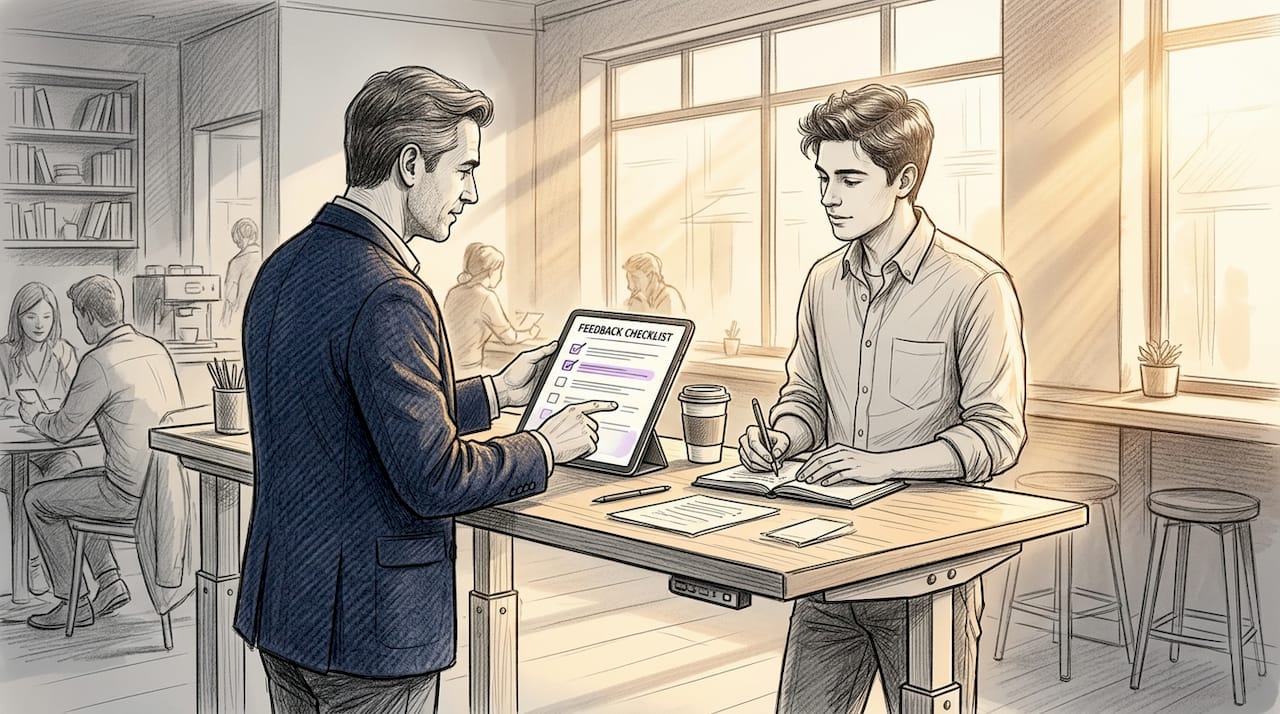
Infrequent annual reviews are poorly designed even for neurotypical employees. For adults with ADHD, waiting 12 months for performance feedback creates a specific problem. You cannot course-correct what you cannot see in real time.
Regular structured check-ins replace guesswork with data, and when paired with ADHD support techniques like executive function coaching, the results compound quickly. Here is what to request in this category:
- Weekly or biweekly one-on-one check-ins instead of quarterly or annual reviews only
- Feedback delivered in writing after verbal conversations, not solely verbal
- Clear, specific feedback with defined next steps rather than vague commentary like “improve organization”
- A grace period when adopting new systems or processes, typically 60 to 90 days
- Access to a workplace mentor or participation in a coaching program
- Acknowledgment in your performance framework that ADHD affects process, not output quality
When you ask for frequent feedback, frame it as a performance optimization request. Most managers respond positively when it is positioned as wanting to stay aligned rather than needing extra supervision.
5. Legal and procedural aspects of requesting accommodations
Knowing what you are entitled to changes how you ask. The Americans with Disabilities Act (ADA) applies to employers with 15 or more employees, and ADHD qualifies as a disability under it. What this means practically:
- You do not need a formal diagnosis form to make a request. A verbal or written request is valid, though employers may ask for documentation when the condition is not visible.
- Your employer must engage in the interactive process collaboratively. This is not optional. Refusing to engage creates legal liability for them.
- Documentation requests must be narrowly focused on limitations, not your full medical history. Your employer cannot demand psychological files or unrelated health records.
- Employers can choose among equally effective alternatives. If noise-canceling headphones serve the same function as a private office, they can provide the less costly option.
- You have the right to privacy. HR is not required to disclose your diagnosis to your manager, only that you have a medical condition requiring accommodation.
Pro Tip: Using the phrase “reasonable accommodation” in your written request is strategic. It signals that you understand the legal framework, which often moves HR departments from passive delay to active response. Pair it with a specific solution and you have a request that is difficult to deny.
6. Comparison of common accommodations by impact and cost
Not all accommodations carry the same weight. Some are free to implement, take 48 hours to approve, and deliver immediate results. Others require budget, policy changes, and negotiation. This table gives you a realistic reference.
| Accommodation | Focus impact | Organization impact | Typical cost to employer | Approval speed |
|---|---|---|---|---|
| Noise-canceling headphones | High | Low | Low ($25-$300) | Fast |
| Flexible start time | Medium | High | None | Medium |
| Written meeting summaries | Medium | High | None | Fast |
| Remote work permission | High | Medium | Low | Medium |
| Weekly manager check-ins | Low | High | None | Fast |
| Task breakdown with micro-deadlines | High | High | None | Fast |
| Private workspace | High | Medium | Medium to high | Slow |
| ADHD coaching program | High | High | Medium | Slow |
The most effective ADHD accommodations tend to be the low-cost ones. Employers approve them faster, and workers often see results within the first week. Start with those, then build the case for larger structural changes if needed.
My honest take on requesting ADHD accommodations at work
I have worked with hundreds of adults with ADHD who delayed asking for accommodations for years. The most common reason was not ignorance of their rights. It was shame. Somewhere along the way, they internalized the idea that needing support meant admitting failure.
Here is what I have learned. Requesting an accommodation is one of the most professionally mature things you can do. It shows self-awareness, strategic thinking, and a commitment to delivering your best work. That is not weakness. That is competence.
The other thing I see hold people back is being vague. “I struggle with focus” gets sympathy. “I need written meeting summaries and permission to use noise-canceling headphones” gets results. Specific, solution-oriented requests move faster and face less resistance because they make the employer’s decision easy.
One more thing. Accommodations are not the whole answer. They reduce friction, but they do not build the internal systems your ADHD brain also needs. Pair your workplace adjustments with real ADHD organization strategies and, where possible, with coaching. That combination is where I have seen people go from surviving their job to genuinely thriving in it.
— Estelle
Ready to build a system that actually supports you?
Accommodations open the door. What you build inside that door is the work that changes everything. At Estelle-rose, we work with adults with ADHD who are done coping and ready to create structures that fit how their brain actually operates.
Whether you are a creative, an entrepreneur, or a professional trying to stop falling through the cracks, Estelle-rose offers executive function coaching tailored to adults with ADHD. We also offer the ADHD workbook for women for those who want a structured self-guided starting point. If you want a community and a coach in your corner, explore ADHD coaching for creatives and see what working with a real accountability partner looks like in practice.
FAQ
What are the most common types of ADHD accommodations at work?
The most common accommodations include noise-canceling headphones, flexible work hours, written task instructions, frequent manager check-ins, and permission to work remotely. These are recommended by the Job Accommodation Network as low-cost, high-impact options.
Do I need a formal diagnosis to request ADHD accommodations?
No. A verbal or written request is legally valid under the ADA. Your employer may ask for documentation confirming the disability and related functional limitations, but they cannot request your full medical history.
Can my employer refuse my exact accommodation request?
Yes, but they must provide an equally effective alternative. If noise-canceling headphones address the same need as a private office, employers can offer the less costly option as long as it enables you to perform your essential job functions.
How do I ask for ADHD accommodations without stigma?
Frame every request around work performance, not personal struggle. Use the phrase “reasonable accommodation” in writing to signal legal awareness. Specific requests tied to outcomes, like “written summaries to improve accuracy on follow-up tasks,” are harder to decline and carry less stigma than general complaints about focus.
Are ADHD accommodations only for students?
No. While many people first encounter ADHD classroom adjustments and learning strategies in school settings, the same principles apply directly to adult workplaces. The ADA covers employed adults, and most workplace accommodations require no specialized equipment or significant cost.

