
What is ADHD coaching? How it helps adults thrive
What is ADHD coaching? How it helps adults thrive
TL;DR:
- ADHD coaching is a distinct, practical support focusing on goal-setting, habits, and accountability.
- It is most effective for adults with diagnosed ADHD seeking daily functioning improvements.
- Consistent participation and self-awareness are key factors in achieving lasting progress through coaching.
Many adults spend years trying medication, therapy, or sheer willpower before they discover ADHD coaching. And when they do, they often ask the same first question: “Is this just therapy with a different name?” It is not. ADHD coaching is a distinct, practical approach built around accountability, goal-setting, and the day-to-day skills that ADHD makes difficult. Prospective studies show improved executive functioning, self-determination, and ADHD symptoms after months of coaching. This guide explains exactly what ADHD coaching is, how it works, who it serves, and what the research says so you can make a clear, informed decision.
Table of Contents
- What is ADHD coaching?
- How does ADHD coaching work?
- Who is (and isn’t) a good fit for ADHD coaching?
- Does ADHD coaching really work? What the research says
- A fresh perspective on ADHD coaching: What most guides miss
- Ready to try ADHD coaching?
- Frequently asked questions
Key Takeaways
| Point | Details |
|---|---|
| ADHD coaching is practical | It focuses on day-to-day management, structure, and accountability for adults. |
| Not therapy or crisis care | Coaching is distinct from counseling and is not a replacement for medical treatment in acute cases. |
| Evidence shows real improvements | Adults using ADHD coaching report better executive function, routines, and self-motivation within months. |
| Best when matched to needs | Those seeking structure and habit change benefit most, while complex mental health issues require clinical care. |
| ADHD coaching is growing | Coaching has rapidly expanded post-pandemic, especially with experienced women practitioners. |
What is ADHD coaching?
ADHD coaching is a practical, collaborative process. A coach works with you to identify where ADHD is blocking your progress, then helps you build systems, habits, and accountability structures to move forward. It is not about fixing you. It is about working with how your brain operates.
The fastest way to understand it is to see how it compares to other support options.
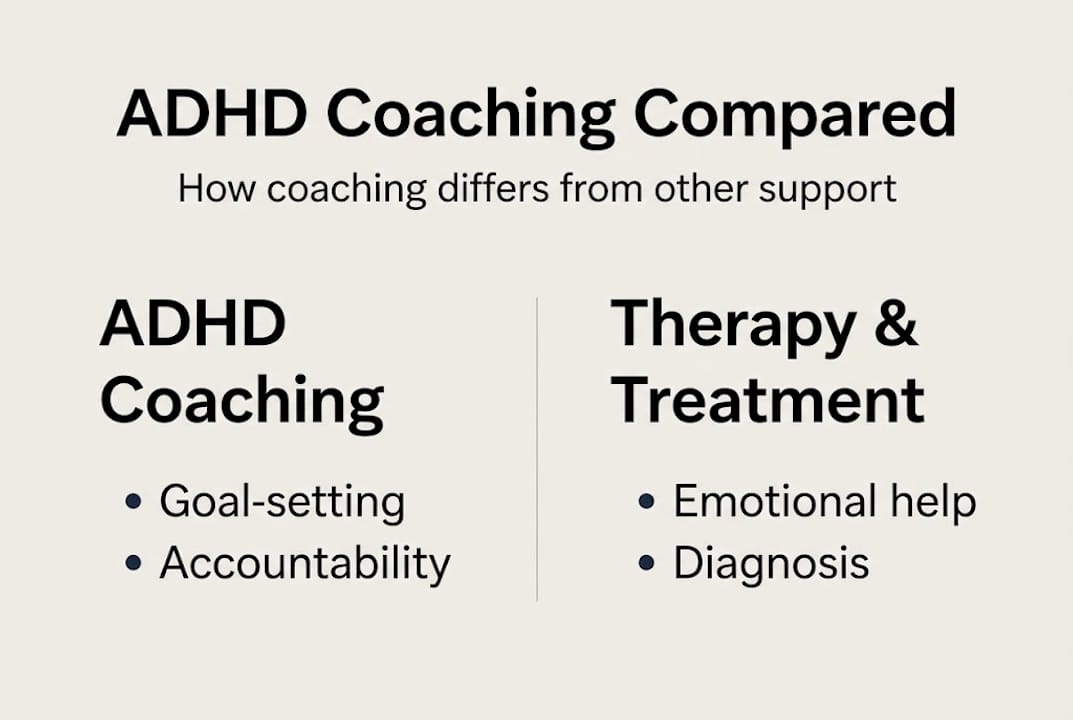
| Support type | Primary focus | Who provides it | Addresses mental health? |
|---|---|---|---|
| ADHD coaching | Goal-setting, habits, accountability | Certified ADHD coach | No |
| Therapy / counseling | Emotional processing, trauma, diagnosis | Licensed therapist | Yes |
| Life coaching | General goals and motivation | Life coach | No |
| Psychiatry | Diagnosis, medication management | Psychiatrist | Yes |
ADHD coaching sits in its own category. It does not process past trauma, prescribe medication, or manage mental health crises. What it does is give you structure and a thinking partner who understands how ADHD works in real life.
Common ADHD coaching methods include:
- Goal-setting frameworks tailored to how adults with ADHD actually think
- Accountability check-ins to keep momentum between sessions
- Motivational interviewing, a widely used evidence-based technique among ADHD coaches in the US
- Self-monitoring tools to track patterns and build self-awareness
- Support for executive function support across work, home, and personal goals
ADHD coaching is not counseling. It is not a substitute for medical treatment. It does not handle crisis situations. Think of it as a structured, ongoing partnership focused entirely on your daily functioning.
“Reviews of 19 studies on ADHD coaching show consistent gains in executive function, with participants reporting stronger self-determination and reduced ADHD-related impairment over time.”
How does ADHD coaching work?
Knowing what ADHD coaching is leads to a natural next question: what actually happens during a coaching engagement? The structure is more organized than most people expect.
A typical coaching engagement follows a clear sequence:
- Initial assessment. Your coach gathers information about your ADHD history, current challenges, and what you want to change. This shapes everything that follows.
- Goal development. Together, you identify specific, realistic goals. These are not vague wishes. They are concrete targets tied to your daily life.
- Weekly sessions. Most coaching relationships involve regular sessions, often 45 to 60 minutes. Each session reviews progress, troubleshoots obstacles, and sets the next action steps.
- Between-session accountability. Homework is real. You might track a habit, try a new system, or complete a task you have been avoiding. This is where most of the actual change happens.
- Ongoing review and adjustment. Goals shift. Life changes. A good coach adjusts the plan as you grow.
The tools coaches use are grounded in evidence. Motivational interviewing helps you connect actions to your own values. Executive function strategies address planning, time awareness, and task initiation. Self-monitoring builds the kind of self-awareness that ADHD often disrupts.
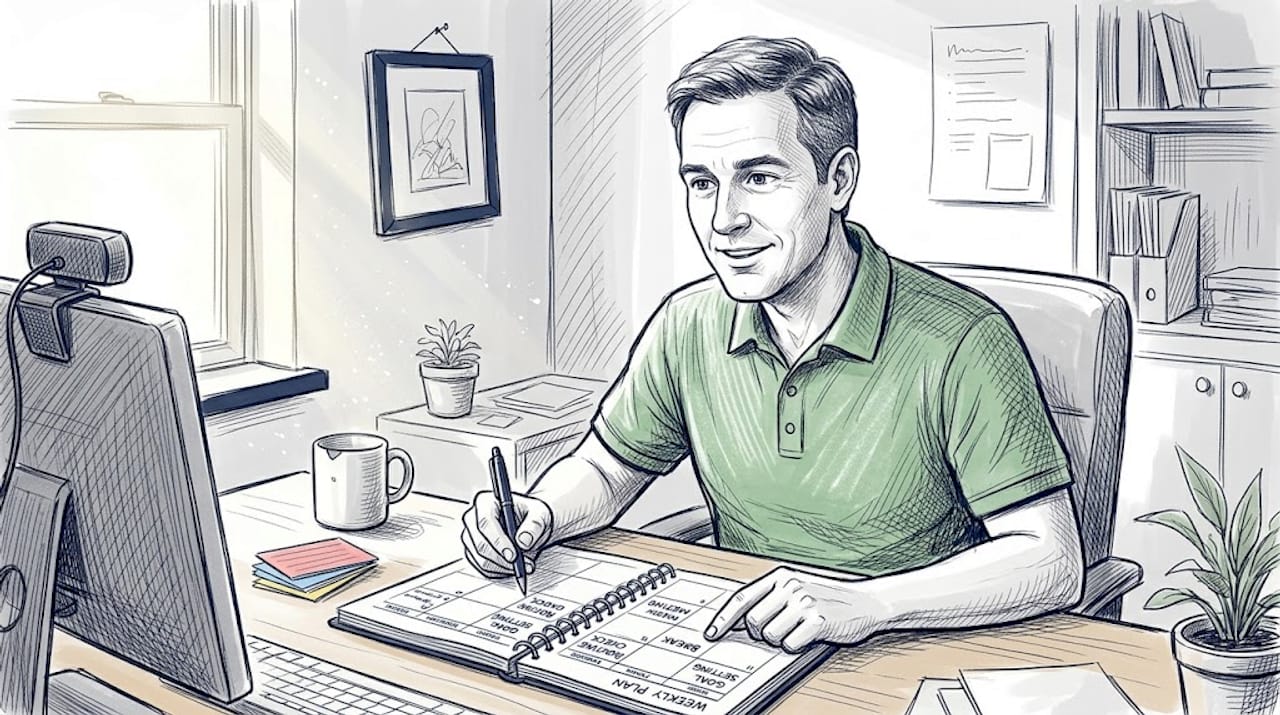
Prospective studies confirm that adults who engage consistently with ADHD coaching report improved routines, stronger self-determination, and measurable symptom progress over several months. The ADHD coaching process is not passive. Results come from showing up and doing the work between sessions.
Pro Tip: Before your first session, write down three specific situations where ADHD is costing you the most. Concrete examples help your coach zero in faster and make your first few sessions immediately useful.
Who is (and isn’t) a good fit for ADHD coaching?
ADHD coaching is not for everyone, and knowing where it fits matters before you invest time and money.
| Good fit | Consider other support first |
|---|---|
| Adults with a confirmed ADHD diagnosis | Adults with undiagnosed or unclear conditions |
| People who want more structure and accountability | Those in active mental health crisis |
| Adults managing work, home, or relationships | Individuals with untreated substance use disorders |
| People who have tried other methods and still feel stuck | Those needing crisis intervention or intensive therapy |
Signs you are a strong candidate for ADHD coaching:
- You have a formal ADHD diagnosis
- You want practical strategies, not just emotional support
- You are motivated to change but struggle with consistency
- You want to improve performance at work, home, or in relationships
- You are open to accountability and feedback
Signs you should seek clinical support first:
- You are experiencing a mental health crisis
- You have active, untreated substance use
- Your ADHD diagnosis has not been confirmed
- You are dealing with severe depression, anxiety, or trauma that is not being treated
Research is clear that coaching is not suitable as standalone care for severe mental health crises, substance use, or undiagnosed conditions. Refer to a qualified professional first in those cases. Coaching works best as part of a broader support picture, not as the only intervention.
Pro Tip: When you start coaching, disclose co-occurring conditions early. Anxiety, depression, and sleep disorders all affect how ADHD shows up. Your coach can adjust the approach, but only if they know the full picture. Women with ADHD in particular often benefit from exploring ADHD coaching for women that accounts for hormonal and social factors.
Does ADHD coaching really work? What the research says
If you are considering coaching, the evidence matters. Here is what current research shows, without the spin.
The most consistent finding is functional improvement. Reviews of 19 studies on ADHD coaching document gains in executive function across multiple populations. Adults report better planning, improved time management, and stronger follow-through. Self-determination, meaning your ability to direct your own life, also improves meaningfully.
Coaching works best when paired with:
- Medication management from a psychiatrist or prescriber
- Therapy for co-occurring anxiety, depression, or trauma
- Self-help tools like workbooks, planners, or habit trackers
- Consistent daily routines that reinforce session work
One notable trend: the coaching workforce surged post-COVID, with 82% of ADHD coaches being women, many of them former therapists. This shift brought clinical skills into the coaching space, which has generally raised the quality of practice.
The honest limitation: coaching lacks the randomized controlled trial evidence that medication and cognitive behavioral therapy have. Researchers are calling for more rigorous trials. That does not mean coaching does not work. It means the evidence base, while promising, is still developing.
“Nineteen studies reviewed note executive function gains from ADHD coaching, with consistent findings across adult populations, though more rigorous randomized trials are still needed to establish stronger efficacy benchmarks.”
For adults who want structured, practical tools alongside coaching, an ADHD workbook for women can bridge the gap between sessions and daily life.
A fresh perspective on ADHD coaching: What most guides miss
The research shows that coaching produces gains. What the research does not capture is the mechanism behind those gains. In practice, the adults who make the most progress are not always the most motivated. They are the most consistent. They show up even when nothing feels like it is working. They track small wins. They do the homework.
Coaching is a slow build. There is no single breakthrough session. Progress is usually invisible until it suddenly is not. The client who logs their tasks every day for six weeks wakes up one morning and realizes they have not missed a deadline in a month. That is how it actually works.
The other thing most guides skip: self-awareness paired with accountability is more powerful than motivation alone. Motivation is unreliable with ADHD. Self-awareness is a skill you can build. When you know your patterns, including your triggers, your avoidance habits, and your peak focus windows, you can design a life that works with your brain.
Integrating organization strategies for ADHD into your daily routine, not just during sessions, is what separates people who see lasting change from those who feel good for a week and then slide back.
Ready to try ADHD coaching?
You now have a clear picture of what ADHD coaching is, how it works, and what the evidence shows. The next step is finding the right fit for your specific situation.
Specialized support is available for adults who want to build stronger Adult ADHD executive support across work and daily life. If you are a woman navigating ADHD, women’s ADHD coaching addresses the unique challenges that standard programs often overlook. Whether you want to book a call, download a workbook, or explore tailored options, Personalized ADHD coaching is available to match where you are right now.
Frequently asked questions
What is the main difference between ADHD coaching and therapy?
ADHD coaching focuses on practical goal-setting and accountability, while therapy addresses emotional issues and mental health treatment. Coaching uses evidence-based techniques for daily functioning improvement, not emotional or crisis support.
Is ADHD coaching effective for all adults with ADHD?
Coaching helps many adults, but those with severe mental health conditions, substance use disorders, or an undiagnosed condition should seek medical or clinical care first. Coaching is not suitable as standalone care in those situations.
How long does it take to see results with ADHD coaching?
Many adults notice improvements in executive function and daily habits within a few months of consistent sessions. Prospective studies confirm measurable gains in self-determination and symptom management after sustained coaching engagement.
Is ADHD coaching only for women?
No, ADHD coaching supports adults of all genders. The coaching workforce is predominantly women post-pandemic, but the service itself is designed for any adult with ADHD seeking structure and accountability.

